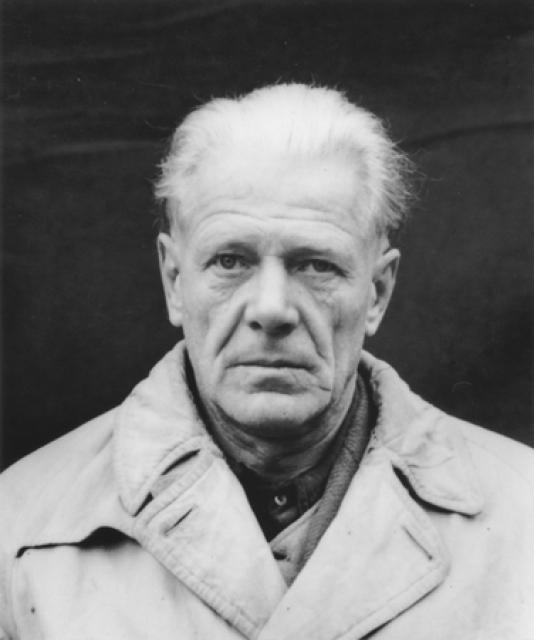
Georg August Weltz
 Germany
Biography of Georg August Weltz
Early Life and EducationGeorg August Weltz was a German radiologist who was involved in experiments on human subjects at the Dachau concentration camp. He was one of the main accused in the Doctors' Trial, which took place from December 9, 1946, to August 20, 1947, in Nuremberg. Despite being charged, Weltz was found not guilty due to lack of evidence.
Weltz studied medicine at the universities of Jena, Kiel, Königsberg, and Munich. After successfully completing his medical education, he defended his dissertation on the "Etiology of Fibromas of the Anterior Abdominal Wall" in 1916. During World War I, he served in the medical corps, initially as a junior doctor.
Medical Career
From 1919 to 1936, Weltz worked at a hospital in Munich, first as a junior doctor and later as a radiologist. In 1936, he became an associate professor at the University of Munich and the head of the Institute of Aviation Medicine, which was established under the auspices of the Luftwaffe. In 1937, he became the chairman of the German Society of Radiologists.
In 1937, Weltz joined the Nazi Party (NSDAP), and in August 1939, he became a senior medical officer (Oberfeldarzt) in the medical service of the Luftwaffe. However, his involvement with the Nazi Party and the Luftwaffe would later lead to his trial for war crimes.
The Doctors' Trial
Weltz was one of the main accused in the Doctors' Trial, where he faced charges for conducting experiments on humans at the Dachau concentration camp. His role was to study the effects of high-altitude jumps and cold water immersion on pilots who were shot down during combat.
In the Dachau concentration camp, a chamber was set up to simulate a free fall from a height of 21,000 meters. Out of the 200 subjects involved in the experiment, approximately 70-80 died. The research aimed to investigate the impact of hypothermia on the human body by immersing the subjects in icy water.
Weltz was also charged alongside Ruff and Romberg in relation to these experiments. However, the court failed to prove their involvement, resulting in their acquittal.
Later Life and Legacy
After his release in 1952, Weltz became a professor of radiophysics at the University of Munich. His involvement in the Doctors' Trial tarnished his reputation, and he faced criticism for his role in unethical human experiments. However, his contributions to the field of radiology prior to his involvement in war crimes cannot be overlooked.
Georg August Weltz's life and career serve as a reminder of the ethical responsibilities that medical professionals hold and the consequences that can arise from their actions. The Doctors' Trial was a significant event in medical ethics and played a crucial role in shaping international standards for human experimentation.


