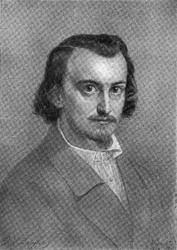
Georg Schmidt
 Germany
- Biography of Georg Schmidt
- Early Years and Education
- Parisian Influences
- Appointment as Court Engraver
- Service in Russia
- Influence in Russia
- Return to Berlin
- Masterful Portraits
- Other Works and Legacy
- Recognition and Publications
Biography of Georg Schmidt
Georg Friedrich Schmidt, also known as Schmidt, was a renowned German engraver, born in 1712 and died in 1775. He is considered one of the greatest copperplate engravers of his time.
Early Years and Education
Schmidt began his artistic training at the Berlin Academy of Arts, studying under the guidance of Johann Peter Busch from 1726 to 1730. During this period, he honed his skills as an engraver on copper.
Parisian Influences
In 1736, Schmidt traveled to Paris to further his artistic development. There, he studied under the renowned engraver Laurent Cars and befriended artists such as Lankre, Ville, and Preissler. It was through his exceptional talent that he caught the attention of the painter Jean-Baptiste Rigaud, which brought him recognition. In 1742, Schmidt's engraved portrait of Pierre Minjard earned him membership in the Paris Academy.
Appointment as Court Engraver
In the same year, Schmidt was appointed as the court engraver by the Prussian king. His exceptional talent and reputation had reached the highest echelons of society.
Service in Russia
In 1757, Schmidt entered into a contract for a five-year service in Russia. Upon his arrival in St. Petersburg, he was immediately appointed as the master engraver of portraits at the Academy of Sciences. When the newly established Academy of Arts opened a graphic arts department in 1759, he was designated as a professor with the title of "Obergraver."
Influence in Russia
Although Schmidt focused primarily on taking commissions and had limited interaction with young Russian engravers, he managed to train several talented disciples. Among his notable pupils were Yakov Vasilyev, Yegor Vinogradov, Alexei Grekov, Dmitri Gerasimov, Ivan Kolpakov, and the highly gifted Yevgeny Chemesov. They all went on to achieve deserved recognition in the field.
Return to Berlin
In 1762, Schmidt returned to Berlin, where he shifted his engraving technique from burin to strong alcohol and drypoint, inspired by Rembrandt. He created approximately 300 engraved plates, with nineteen executed in Russia.
Masterful Portraits
Schmidt's portraiture work was particularly remarkable, with his best pieces being the portraits of Count Évrard, Minjard, the Archbishop of Knabresk, Rigaud, Prince of Anhalt, Antoine Pesne, Abbot Prévost, Baroness Grapendorf, Esterhazy, Empress Elizabeth Petrovna, and Count C. Razumovsky, among others. His engraving tool was firm and smooth, while his strokes, produced using various techniques such as burin, etching, and drypoint, were often irregular but collectively brilliant and picturesque. He had no rivals in terms of executing accessories in portraits.
Other Works and Legacy
In addition to portraits, Schmidt engraved numerous genre scenes, gallant scenes, historical subjects, copies of Rembrandt, and a few landscapes. His Berlin school produced several outstanding engravers, including Ficke, A. Beck, and D. Berger.
Recognition and Publications
Schmidt's remarkable body of work has been recognized and documented in various publications, including Jacobi's "Catalogue raisonné de l'oeuvre de G.F. Schmidt" (London, 1789), Wessely's "Georg Friedrich Schmidt, Verzeichniss seiner Stiche etc." (Hamburg, 1887), and Apel's "Das Werk von G. Fr. Schmidt" (Dresden, 1887).