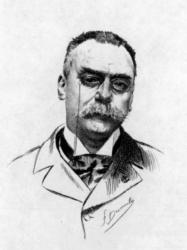
Sol LeWitt
 USA
USA- Sol LeWitt: A Pioneer of Conceptualism and Minimalism
- Early Influences and the Black Square
- Form and Color in Geometric Figures
- Conceptual Art and the Intellectual Challenge
- Wall Drawings and the Role of Instructions
- The Economy of Conceptual Art
- Legacy and Impact
Sol LeWitt: A Pioneer of Conceptualism and Minimalism
Sol LeWitt (1928-2007) was an American artist and a central figure in the movements of minimalism and conceptualism. His work and theoretical writings have profoundly influenced contemporary art.
Early Influences and the Black Square
LeWitt's work was significantly influenced by Russian avant-garde and constructivism. He considered Malevich's "Black Square" as the foundation of his artistic approach, seeing the cube as a "basic unit." LeWitt manipulated this form, slicing off its edges, creating grids, and multiplying cubes to evoke a sense of chaos.
Form and Color in Geometric Figures
LeWitt experimented extensively with form and color, working predominantly with simple geometric shapes in a monochromatic palette. His sculptures, wall drawings, and graphic series explored the possibilities of repetition, rearrangement, and the relationship between concept and execution.
Conceptual Art and the Intellectual Challenge
In his influential 1967 Artforum article, LeWitt defined conceptual art as prioritizing intellectual engagement over emotional response. He believed that artists should "make the work intellectually interesting for the viewer and not emotionally moving."
Wall Drawings and the Role of Instructions
LeWitt's wall drawings involved the precise execution of standard straight lines by teams of painters. He emphasized the importance of scale, location, and dimensions, while downplaying the aesthetic qualities of the finished work. "They should not be beautiful," he stated, "They should be boring."
The Economy of Conceptual Art
LeWitt coined the term "economy" in relation to conceptual art. He argued that ideas could be expressed in various forms, including numbers, photographs, and words, without compromising their artistic value. According to LeWitt, "Conceptual art is only good when the idea is good."
Legacy and Impact
Sol LeWitt's groundbreaking work has had a monumental impact on the art world, challenging traditional notions of artistic production and expanding the boundaries of contemporary practice. His insistence on the primacy of ideas over materiality and his exploration of systems and rules continue to inspire artists today. LeWitt's works are prominently featured in major contemporary art collections worldwide, solidifying his status as a visionary in the field.