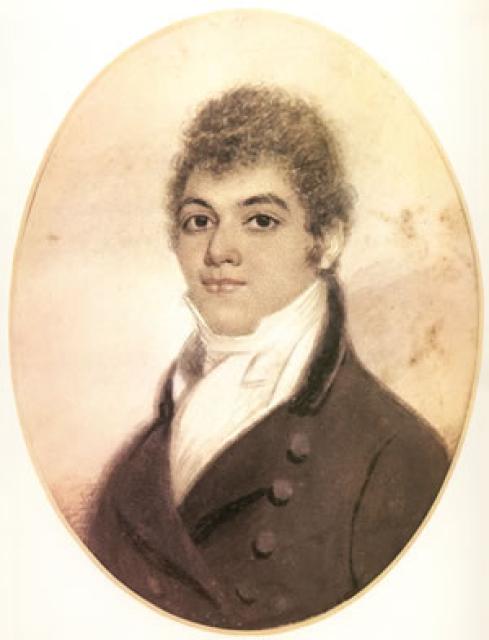
George Augustus Polgreen Bridgetower
 Great Britain
- A Life of Notes: George Polgreen Bridgetower
- A Protege's Journey
- Early Stardom
- Patronage and the Prince
- Encounter with Beethoven
- A Defining Moment
- From Stardom to Obscurity
- Legacy and Artistic Pursuits
- Honoring His Legacy
- A Comprehensive Biography
A Life of Notes: George Polgreen Bridgetower
Born to an enigmatic lineage masked in mystery, British violinist George Polgreen Bridgetower's background remains shrouded in allure. His father, a man of African descent who served in the court of Esterházy, is believed to have hailed from Barbados, while his mother's origins remain uncertain, possibly Austrian or Polish.
A Protege's Journey
Childhood's fortunes led young Bridgetower to the Esterházy court during Joseph Haydn's tenure. Bridgetower claimed to have received his initial musical education from the esteemed composer. Later, he studied under Giovanni Giornovichi.
Early Stardom
Embarking on a concert tour with his father in 1789, Bridgetower made his debut in Paris, showcasing his prodigious talent. Over the following year, he dazzled audiences in London, Bristol, and Bath. His father's theatrical flair amplified his performances, presenting his son in exotic Turkish attire.
Patronage and the Prince
Prince George of Wales, drawn to Bridgetower's artistry, took the young violinist under his wing. Under the royal's guidance, Bridgetower continued his musical education with renowned masters like François Hippolyte Barthélemon and Thomas Attwood, performing numerous solo concerts throughout England.
Encounter with Beethoven
In 1803, Bridgetower traveled to Vienna, where he first encountered Ludwig van Beethoven. Seeking the maestro's patronage, Bridgetower requested Beethoven's support for a solo concert. Beethoven, intrigued by the violinist's abilities, agreed to perform alongside him, promising a new composition for the occasion. Just in time, Beethoven finished his Ninth Violin Sonata, inscribed with a playful dedication to Bridgetower.
A Defining Moment
On May 24th, Bridgetower and Beethoven premiered the sonata with remarkable spontaneity. Additionally, Beethoven provided Bridgetower with a glowing letter of recommendation, praising his exceptional talent as both a soloist and a chamber musician. However, upon publication, the sonata was dedicated to a different violinist, Rodolphe Kreutzer.
From Stardom to Obscurity
Bridgetower returned to England, achieving recognition as a member of the Royal Society of Musicians. He earned a musical degree from Cambridge University and became a regular performer with the London Philharmonic Society. In his later years, Bridgetower's fame diminished, fading into obscurity.
Legacy and Artistic Pursuits
Historical accounts suggest that Bridgetower composed sporadically, submitting a choral anthem for his Cambridge degree. While most of his compositions have been lost, a short piece has been recently discovered and performed.
Honoring His Legacy
Bridgetower's memory lives on through the Boston-based Bridgetower String Quartet, established in 1973. In addition, a short film, "A Mulatto Song," and literary works such as Frances Greer Williams' "The Abyssinian Prince" and Dieter Kühn's "Beethoven und der schwarze Geiger" delve into his life and legacy.
A Comprehensive Biography
In 2005, American violinist and musicologist Clifford Panton published the definitive biography of George Polgreen Bridgetower, shedding light on the enigmatic and extraordinary life of this remarkable musician.