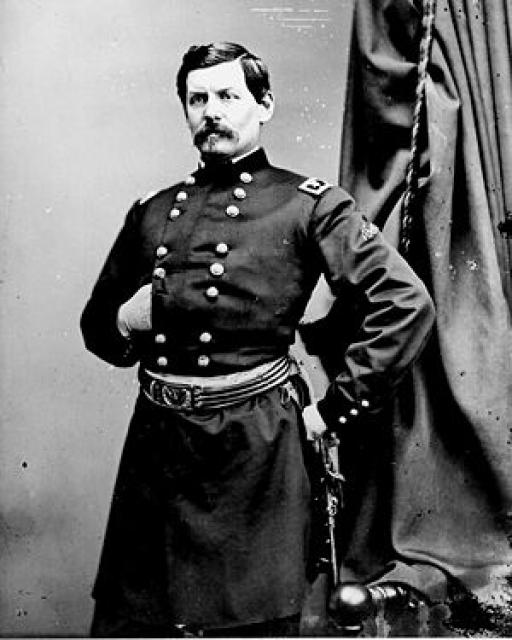
George Brinton McClellan
 USA
USA- Early Life and Education
- Crimean War and Mexican War
- Railroad Engineering
- Civil War Service
- The "Little Napoleon"
- Military Shortcomings
- Fall from Grace
- Political Career
- Later Life and Legacy
Early Life and Education
George Brinton McClellan was born in Philadelphia in 1826, the son of a surgeon. He excelled in his studies and graduated second in his class at the United States Military Academy at West Point in 1846.
Crimean War and Mexican War
McClellan's early military career included service in the Mexican-American War, where he distinguished himself as an engineer. In 1855, he was dispatched as a military observer to the Crimean War and witnessed the siege of Sevastopol firsthand.
Railroad Engineering
Upon his return to the United States in 1857, McClellan resigned from the army and pursued a career in railroad engineering. He became president of the Illinois Central Railroad and played a key role in developing the railroad infrastructure of the Midwest.
Civil War Service
With the outbreak of the American Civil War, McClellan eagerly returned to military service. He successively commanded Union volunteers, the Ohio militia, the Potomac Military District, and the Army of the Potomac. From November 1861 to March 1862, he served as General-in-Chief of the Union Army.
The "Little Napoleon"
McClellan's ambition and flair for self-promotion earned him the nickname "Little Napoleon." He obsessively studied Napoleon's tactics and frequently posed in a "Napoleonic pose" in photographs. However, despite his self-assured exterior, McClellan was plagued by indecisiveness and a tendency to overestimate Confederate strength.
Military Shortcomings
While a skilled engineer and meticulous organizer, McClellan lacked the decisive leadership qualities required of a battlefield commander. He repeatedly failed to seize opportunities to crush Confederate armies, including during the Seven Days Battles, when his forces stood at the gates of Richmond.
Fall from Grace
McClellan's timidity and incompetence finally led to his dismissal from command in November 1862. Despite his initial popularity with the Union army and public, his inaction and arrogance ultimately led to his downfall.
Political Career
After his military career, McClellan pursued politics. He unsuccessfully ran for president in 1864. However, he later succeeded in becoming the Governor of New Jersey, serving from 1878 to 1881.
Later Life and Legacy
McClellan died in 1885. His legacy as a military commander remains controversial, with critics labeling him a timid and overly cautious general. However, his contributions to railroad engineering and his role in shaping the Union Army during the early stages of the Civil War deserve recognition.


