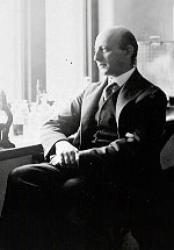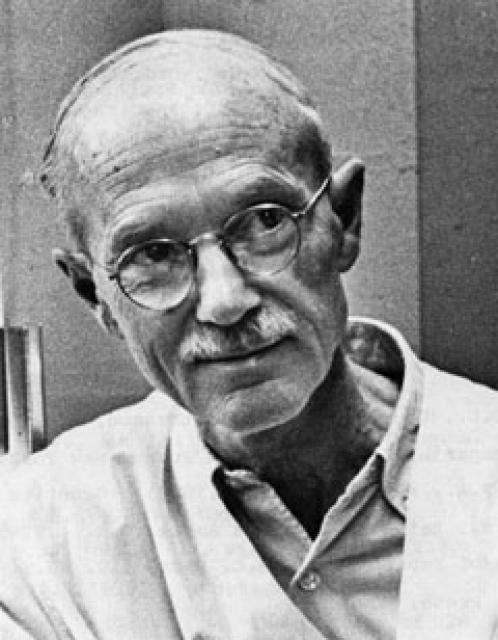
George Davis Snell
 USA
USABiography of George Davis Snell
Early Life and EducationGeorge Davis Snell, an American geneticist, was born in Bradford, Massachusetts, to parents Catherine Snell (Davis) and Callen Bryant Snell. His father was an inventor who developed a method for winding induction coils. Snell grew up with two siblings and developed a keen interest in mathematics and natural sciences during his time at a public school in Brooklyn, where his family moved when he was four years old. He enjoyed reading books on astronomy and physics and playing football with his friends. Snell enrolled at Dartmouth College in 1922, initially focusing on mathematics and physics. However, after taking a genetics course taught by Professor John Gerould, he became captivated by the subject and decided to pursue a career in genetics.
Career and Research
After earning a bachelor's degree in science from Dartmouth College in 1926, Snell began studying genetics at Harvard University under the guidance of William Castle, the first American biologist to apply Mendel's laws of inheritance to mammalian genetics. In his student research, Snell focused on studying the linkage of genes in chromosomes that limited or excluded their independent inheritance. This phenomenon, discovered by Thomas Hunt Morgan in 1910, became the topic of Snell's doctoral dissertation, which he defended in 1930.
Following the completion of his doctoral degree, Snell taught zoology at Dartmouth College and Brown University for two years. He then received a grant from the National Research Council, which allowed him to work for two years at the University of Texas under the supervision of Hermann Muller. During his time there, Snell conducted research on the genetic consequences of X-ray irradiation on mice and was the first to establish that radiation induces mutations in mammals.
In 1933, Snell became an assistant professor at Washington University in St. Louis, Missouri. However, he was determined to pursue scientific research rather than teaching, so he joined The Jackson Laboratory in 1935. The Jackson Laboratory, established by Clarence Cook Little in Bar Harbor, Maine, in 1929, aimed to become a center for mammalian genetics research. Snell's early work at the laboratory focused on studying mutations caused by radiation exposure. In the late 1930s, as he concluded these studies, Snell began contemplating new scientific projects, including the genetic aspects of transplantation.
Snell's groundbreaking research on tissue compatibility genes, which determine the acceptance or rejection of transplants, began in the late 1930s. He coined the term "histocompatibility genes" to describe these genetic factors. In 1937, Guy Peter Gorczynski, a researcher from a London hospital, discovered a tissue protein involved in the rejection of transplants in mice, which he named antigen II. In 1946, Gorczynski joined The Jackson Laboratory to collaborate with Snell. They found that Gorczynski's antigen and Snell's histocompatibility locus were identical, leading them to introduce a new term, H-2 gene, to unify their findings. They later discovered that H-2 was not a single gene but a group of genes closely located on the same chromosome. This cluster of genes became known as the Major Histocompatibility Complex (MHC) or supergene.
Snell's research on the MHC continued throughout the 1950s and involved using inbred mouse lines developed by him and his colleagues for gene isolation. In the mid-1950s, he successfully bred mice with reciprocal genes that could both accept transplants from one strain and reject transplants from another strain. By the late 1950s, Snell had compared the isolated MHC genes and identified a group of approximately ten loci responsible for transplant rejection. He identified the H-2 gene as the most influential locus in the rejection response. By this time, Snell and Gorczynski had established the detailed similarities between the MHC systems in mice and humans.
In 1980, Snell, along with Jean Dausset and Baruj Benacerraf, was awarded the Nobel Prize in Physiology or Medicine "for discoveries concerning genetically determined structures on the cell surface that regulate immunological reactions." Their research revolutionized the understanding of tissue compatibility and immune responses. Snell's contributions to studying the MHC expanded beyond tissue compatibility genes to other genes within the complex and various aspects of transplantation.
Personal Life and Legacy
In 1937, Snell married Rhoda Carson, and they had three sons together. He retired from The Jackson Laboratory in 1969 and currently resides and continues his work in Bar Harbor, maintaining connections with researchers from around the world. Snell is an avid gardener and spends much of his time tending to his garden.
Throughout his career, Snell received numerous awards, including the Osborne and Mendel Awards from the American Institute of Nutrition (1951), the Gregor Mendel Medal from the Czechoslovak Academy of Sciences (1967), the International Award of the Gairdner Foundation (1976), and the Wolf Prize in Medicine from the Wolf Foundation in Israel (1978). He is a member of the National Academy of Sciences, the Transplantation Society, and the American Society of Human Genetics. His work on the MHC and tissue compatibility systems remains a crucial contribution to modern biology.