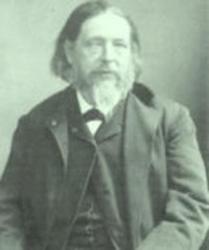
Georges Seurat
 France
Biography of Georges Seurat
Georges Seurat was a French painter and the founder of Neo-Impressionism. He studied at the School of Fine Arts in Paris and supplemented his academic education by studying the scientific theory of color. His interest in color theory laid the foundation for his experiments in regulating contrasts of light and color in his large landscape painting "Bathing at Asnières" (1883-1884, London, Tate Gallery).
Development of a Unique Painting Technique
Seurat's next painting, "Sunday Afternoon on the Island of La Grande Jatte" (1884-1886, Chicago, Art Institute), was presented at the last Impressionist exhibition in 1886. Here, Seurat developed his original painting technique - using small strokes of pure colors mixed only with white pigments. This technique is often referred to as Pointillism, but the artist and his followers preferred the term "Divisionism." This technique was so complex that Seurat only completed seven large compositions during his short life, not including landscapes and drawings.
Contrast to Impressionism
Seurat's pursuit of rigid structure and order in his work contrasted with the intuition of the Impressionists. This led to the term "Neo-Impressionism" to describe his created method. It is likely that this term was coined by Félix Fénéon, who became the main critic of this painting style. In Seurat's landscapes and those of his friends Paul Signac, Henri-Edmond Cross, and Maximilien Luce, the depiction of industrial buildings on the outskirts of Paris contrasts sharply with the aesthetics of the Impressionists, who sought picturesque views along the banks of the Seine.