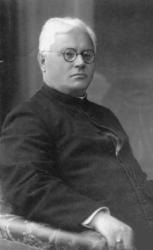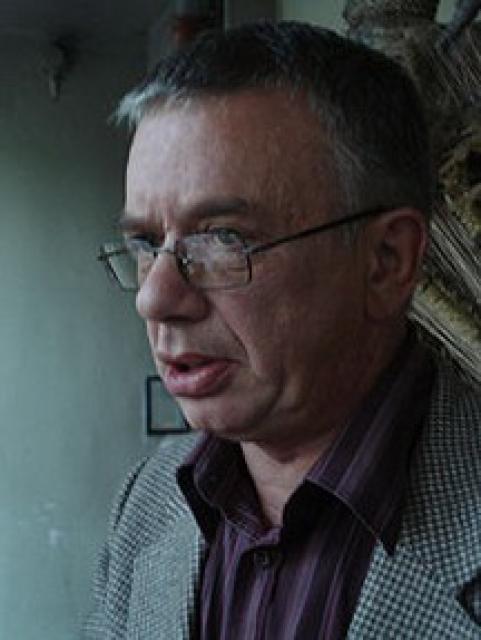
Georgiy Efremov
 Lithuania
- Georgy Efremov: A Multifaceted Russian Literary Figure
- Literary Career
- Teaching and Translation
- Awards and Recognition
- Publications
Georgy Efremov: A Multifaceted Russian Literary Figure
Early Life and EducationGeorgy Efremov was born in Moscow in a family of school teachers. He pursued his studies at the Vilnius Pedagogical Institute from 1969 to 1971.
Literary Career
Efremov's literary career began in 1970 with the publication of his poems and rewrites. In 1973, he became the literary secretary to the renowned poet David Samoylov. He was also a co-founder and director of the publishing house "Vest" from 1986 to 1995.
In the late 1980s, Efremov became involved in the Lithuanian independence movement "Sąjūdis." He played a role in publishing and editing the movement's Russian-language press and served as a member of the Sąjūdis Seimas Council from 1988 to 1990.
Teaching and Translation
From 1991 to 1995, Efremov taught translation studies at the Maxim Gorky Literature Institute in Moscow. He also worked as a manager at the Institute of Molecular Biology of the Russian Academy of Sciences from 1996 to 1998.
Efremov is highly regarded for his translations. He has brought into Russian the works of Lithuanian poets such as Sigitas Gėda, Marcelijus Martinaitis, and Justinas Marcinkevičius, as well as poets from around the world, including Rudyard Kipling, Czesław Miłosz, and Bob Dylan.
Awards and Recognition
In 2006, Efremov became the first recipient of the Jurgis Baltrušaitis Prize. In 2007, he was awarded the "Master of Translation" prize by the Boris Yeltsin Presidential Library.
Publications
Efremov's own poetry and writings have been featured in numerous literary journals and anthologies. He has also authored several books of poetry, including "On the Wind" (1984), "These Crowded Times" (1988), and "Stone, Tree, Bird" (1992). His non-fiction work includes "We Are People to Each Other," a chronicle of events in Lithuania during its transition to independence.