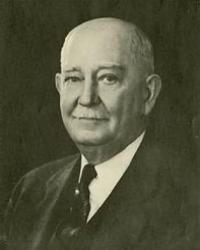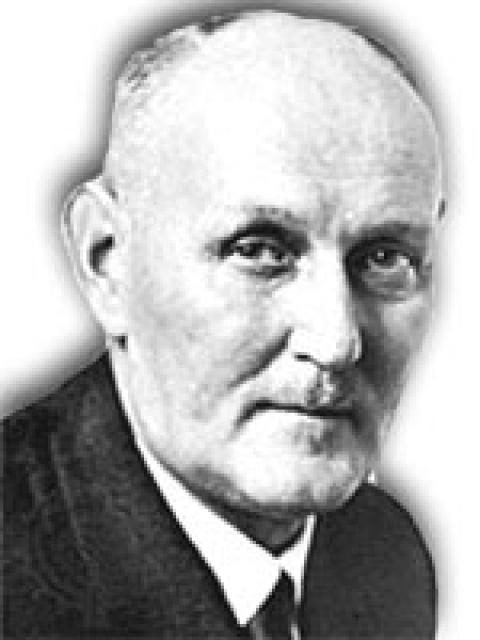
Gerkhard Domagk
 Germany
- Gerhard Domagk: Pioneer of Antimicrobial Chemotherapy
- Military Service and Medical Career
- Research on Antibacterial Agents
- Discovery of Prontosil
- Nobel Prize and Nazi Persecution
- Later Research and Personal Life
Gerhard Domagk: Pioneer of Antimicrobial Chemotherapy
Early Life and EducationGerhard Johannes Paul Domagk was born in Lagow, Brandenburg, Germany, on October 30, 1895, to Paul Domagk and Martha (Reimer) Domagk. He received his primary education in Sommerfeld, where his father worked as a teacher and assistant school principal. After graduating from secondary school in Liegnitz, Domagk enrolled in the medical faculty at the University of Kiel in 1914, on the eve of World War I.
Military Service and Medical Career
Domagk volunteered for service on the Eastern Front, where he was wounded and later served in medical units until the end of the war. He resumed his studies in Kiel and earned his medical degree in 1921 with a dissertation on creatinine production in humans.
Domagk remained at the University of Kiel as an assistant in the chemistry and pathology departments while pursuing research on the use of X-rays in nephritis and cancer at the Pathological Institute in Greifswald. In 1924, he became an associate professor of general pathology and anatomy. The following year, Domagk was appointed associate professor at the University of Münster and rose to the rank of professor of general pathology and pathological anatomy in 1928.
Research on Antibacterial Agents
In 1927, Domagk was approached by the German chemical conglomerate I.G. Farbenindustrie to become director of their experimental scientific-research laboratory for pathology and bacteriology in Wuppertal-Elberfeld. He remained there until his retirement.
In 1932, Domagk discovered that a red azo dye, synthesized by chemists Fritz Mietzsch and Joseph Klarer and marketed by I.G. Farbenindustrie under the name "Prontosil," effectively treated streptococcal infections in mice.
Discovery of Prontosil
Domagk's experimental results with Prontosil as a therapeutic agent were first published in a landmark article in the "Deutsche Medizinische Wochenschrift" in February 1935. One of his first patients treated with Prontosil was his daughter, Hildegard, who had a streptococcal infection resistant to all other treatments. When she was near death, Domagk administered massive doses of Prontosil, which resulted in a rapid recovery.
Further research demonstrated Prontosil's effectiveness against other human diseases caused by various bacteria. Physicians found it beneficial in treating cerebrospinal meningitis, pneumonia, and gonorrhea. Sulfonamide drugs were immediately introduced into surgical and dental practice.
Nobel Prize and Nazi Persecution
Domagk's discovery of the antibacterial effects of Prontosil, the first of the so-called sulfonamide drugs, was one of the greatest therapeutic advances in medical history. René Dubos later showed that natural products produced by microorganisms could also exert antibacterial action, and Alexander Fleming's discovery of the effects of penicillin ushered in a new era in medicine.
Domagk was awarded the Nobel Prize in Physiology or Medicine in 1939 "for the discovery of the antibacterial effects of Prontosil." However, three years earlier, Adolf Hitler had banned any German from receiving a Nobel Prize in retaliation for the award of the Nobel Peace Prize to anti-Nazi Carl von Ossietzky. Following his Nobel Prize, Domagk was arrested, briefly imprisoned, and forced to renounce it.
At the award ceremony, Nanna Schwartz of the Karolinska Institute, acknowledging the significance of Domagk's work, stated, "Prontosil's discovery has opened up unforeseen prospects for combating infectious diseases. The foundation for this unexampled spread of chemotherapy within a less than five years' period was laid by Domagk and his co-workers." He added, "Thousands and thousands of human lives are being saved every year by Prontosil and its derivatives." In 1947, Domagk traveled to Stockholm to receive his diploma and gold medal, but under the terms of the award the prize money had to be returned to the Nobel Committee's reserve fund, and he was unable to collect it.
Later Research and Personal Life
During World War II, Domagk studied tuberculosis and by 1946 reported on the tuberculostatic effects of sulfathiazole and sulfathiadiazole. Thiosemicarbazones and isonicotinic acid hydrazide were also found to be effective against tuberculosis, even in cases resistant to streptomycin.
In his later years, Domagk focused on cancer research, hoping to find a substance that would destroy malignant cells without harming other cells in the body.
Domagk married Gertrud Strube in 1925; they had a daughter and three sons. He died in Burberg, Baden-Württemberg, Germany, on April 24, 1964.
He received numerous honors, including the German Chemical Society's Emil Fischer Medal (1937), the Cameron Prize and Professorship at the University of Edinburgh (1938), the Paul Ehrlich Gold Medal of the University of Frankfurt (1956), and the Order of the Rising Sun, bestowed by the Japanese government (1960).