
Giacomo Puccinni
 Italy
ItalyBiography of Giacomo Puccini
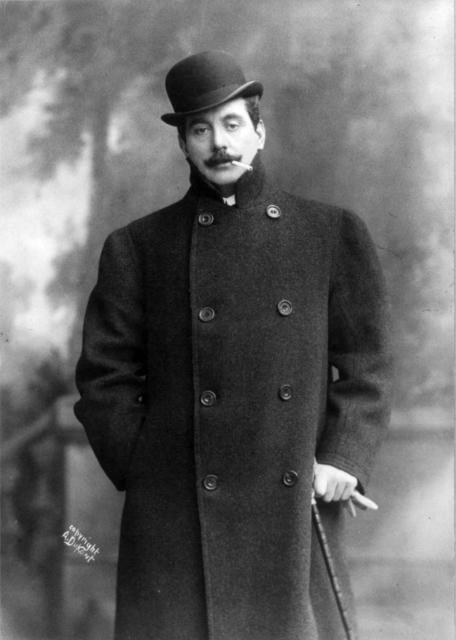
Giacomo Puccini was an Italian opera composer, organist, and choir master, known for his contribution to the "verismo" movement in music. Some researchers consider him the greatest Italian opera composer after Verdi. He was born on December 22, 1858, in Lucca, into a family of musicians.
Early Operas
Puccini first gained attention with his early operas "Le Villi" (Milan, 1884), "Edgar" (Milan, 1890), and "Manon Lescaut" (Turin, 1893). However, his first major success came with the production of "La Bohème" (Turin, 1896), based on the famous novel by A. Murger, "Scenes from Bohemian Life". The opera depicts the carefree, sometimes joyful, sometimes melancholic lives of young Parisian artists in the Latin Quarter. Puccini incorporates elements of Debussy's impressionistic style, realistic depictions of life in the spirit of Mascagni, and his own unique blend of humor, charm, inspiration, and sensuality.
Later Operas
Among Puccini's later operas, "Tosca" (Rome, 1900) gained the most recognition since its premiere. Despite its sadistic plot, including murder, suicide, and torture, the music of "Tosca" is not only deeply dramatic but often filled with remarkable tenderness and lyrical tremors. Four years later, he presented "Madame Butterfly," but the premiere received such a cold reception that Puccini withdrew the score for a complete revision. The new version premiered three months later. In "La Fanciulla del West" (New York, 1910), there is a slight decline in inspiration, but three one-act operas – "Il Tabarro," "Suor Angelica," and the particularly witty and joyful "Gianni Schicchi" – prove that Puccini reached the height of his mastery during this period, at least from a technical standpoint. His last opera, "Turandot," remained unfinished. After the composer's death, it was completed by F. Alfano and premiered in Milan in 1926.
Style and Legacy
In his works, Puccini draws on the model of French lyric opera (Massenet and Verdi in "La Traviata"). Melodiousness and sentimentality are intricately combined with the roughness and cruelty of the plot, with the leading roles always being female. Puccini had a firm grasp of orchestral techniques, but wide melodic lines and easy recitatives always held a predominant value for him. Among his few compositions in other genres, only two orchestral pieces worth mentioning: "Capriccio Sinfonico," written as his thesis when graduating from the Milan Conservatory, and "Inno a Roma," composed in 1919 for Roman schools. Puccini passed away in Brussels on November 29, 1924.




