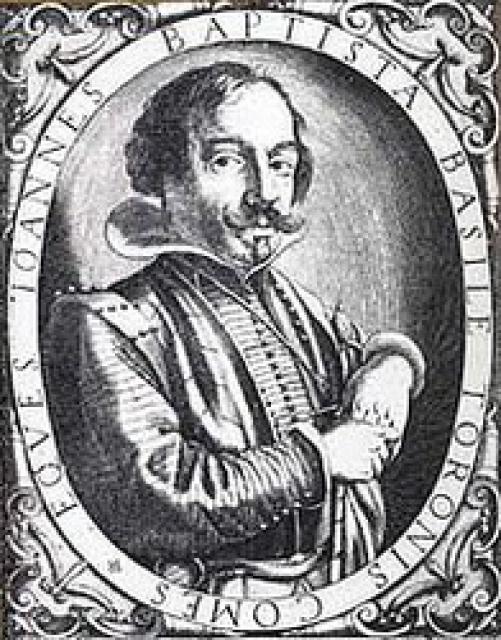
Giambattista Basile
 Italy
ItalyBiography of Giambattista Basile
Giambattista Basile, an Italian poet and writer, was born in Naples into a modest noble family. He served in the Venetian army, worked as a courtier for Prince Avellino, the Viceroy of Naples, and Vincenzo I Gonzaga, from whom he received the title of Palatine Count. Basile's brothers also served the Spanish and Italian princes. Despite holding positions of power and managing large estates, Basile remained poor, leading a selfless and humble life, much to the dismay of his friends.
Influence of Basile's Sister
Basile's career was greatly influenced by the fame of his sister, Adriana, who was recognized as the first singer in Italy. Her talents were admired by John Milton, who lived in Rome in the late 1630s, and poets dedicated collections of verse to her. Basile composed texts for music, many of which were intended for Adriana and her daughter, also a singer.
Literary Works
Basile wrote poems that praised the aristocrats he served. His long poem in octaves, "Feagen," and pastoral drama, "Misadventures with Adventures," exemplify the marinus style that was fashionable at the time. However, his greatest success came with the poetic collection "Neapolitan Muses" ("La Musa Napoletana," 1635), which contains colorful and whimsical depictions of the city of Naples in its nine eclogues-dialogues. The reader can vividly imagine and experience the quarrels, gossip, and conversations of street vendors, adventurers, prostitutes, thieves, city gossipers, naive young men who come to the capital from surrounding villages in search of entertainment and work.
Legacy
Basile's works continue to be read and translated into new languages, especially his collection "The Tale of Tales" ("Lo cunto de li cunti," 1634; also known as "Pentamerone"). It includes 50 fairy tales divided into five days and connected by a framing story, written in the Neapolitan dialect. These tales are based on peasant folklore and are the first book of folk fairy tales in the history of European literature, adapted in the Baroque style. Basile's inexhaustible ability to invent, combine, and modulate themes is evident in his work, as he rarely repeats himself, surprising readers with the richness of plots and situations.