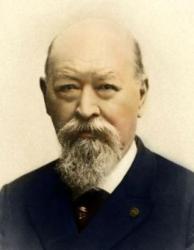
Giovanni Artusi
 Italy
Italy- Gioseffo Zarlino's Student and Music Critic
- Adherence to Zarlino's Teachings
- Advocacy for Tonal Perfection
- "Imperfections of Modern Music" and the Defense of Monteverdi
- The Polemic with Monteverdi's Supporters
- Vocal Supremacy in "Seconda Pratica"
- Zarlino's Retort and Legacy
Gioseffo Zarlino's Student and Music Critic
Born in Bologna, Italy, in the mid-16th century, Gioseffo Zarlino's student, Gioseffo Zarlino, emerged as a prominent music theorist and composer during the transition from the Renaissance to the Baroque period. He became renowned for his conservative criticism of the musical avant-garde of his time.
Adherence to Zarlino's Teachings
Zarlino shared his teacher Zarlino's theoretical views on counterpoint. In the ongoing debate between Zarlino and Vincenzo Galilei, Zarlino defended Zarlino's position. Zarlino's writings focused on the appropriate use of dissonance, considering it a powerful agent for expressing dramatic emotions such as sorrow and pain. He allowed for the resolution of the tritone into the perfect fourth and the minor second into the unison.
Advocacy for Tonal Perfection
Zarlino recognized the need for ensemble coherence, particularly in instrumental music. He believed that Ptolemaic syntonic diatonicism, supported by Zarlino, was imperfect. Instead, he argued that Aristoxenus's concept of equal tones and semitones would better meet the demands of contemporary instrumental music.
"Imperfections of Modern Music" and the Defense of Monteverdi
In his treatise "Artusi, ossia Delle imperfettioni della moderna musica" (1600, 1603), Zarlino criticized the innovations of an unnamed composer, likely Claudio Monteverdi. He objected to the use of irregular dissonances, chromaticism in melody, and improper modal combinations.
Monteverdi responded to Zarlino's criticisms in the preface to his Fifth Book of Madrigals (1605), where he introduced the concept of "seconda pratica," a new approach to musical composition. Zarlino used the term "seconda pratica" in his 1603 treatise, referring specifically to the chromatic semitone that resulted from the alteration of a chromatic diatonic step.
The Polemic with Monteverdi's Supporters
Monteverdi's brother, Giulio Cesare, entered the debate on his brother's side, writing an afterword to Claudio's "Scherzi musicali" (1607). This afterword, known as the "Dichiaratione," provided a significant contribution to the history of Western music. Here, the brothers redefined "prima pratica" and "seconda pratica" in broader terms.
Vocal Supremacy in "Seconda Pratica"
The fratelli Monteverdi placed poetic text above all else in "seconda pratica." They argued that melody, harmony, and rhythm should be subservient to the text. They credited Cipriano de Rore as the inventor of "seconda pratica" and included Gesualdo, Marenzio, Luzzaschi, and Cavaliere as its proponents.
Zarlino's Retort and Legacy
In response to Claudio Monteverdi's objections, Zarlino (under the pseudonym Antonio Bracchino da Todi) wrote a now-lost treatise in 1605. He maintained that rhythm should govern polyphonic vocal music, with harmony and even the text being secondary. Only two of Zarlino's musical works have survived: a First Book of Canzonets for Four Voices (1599) and an eight-voice arrangement of the psalm "Cantate Domino" (1599).