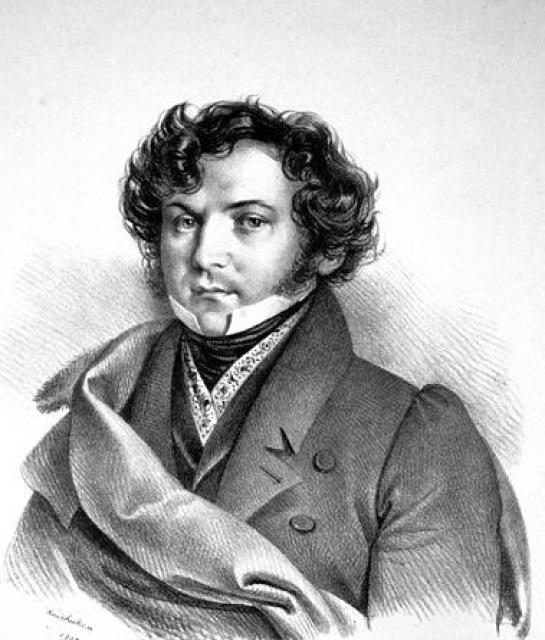
Giovanni Battista Rubini
 Italy
Italy- Early Life and Musical Education
- Early Career and Breakthrough
- International Success
- Collaboration with Vincenzo Bellini
- Later Life and Legacy
Early Life and Musical Education
Giovanni Battista Rubini, an Italian operatic tenor, was born on April 7, 1794, in Romano di Lombardia, Italy. He came from a modest family and was the youngest of nine children. His father, Giovanni Battista, was a gloomy and uneducated tailor, but deeply religious. His mother, Caterina Bergomi, took care of the household and children. Rubini's musical talent was evident from a young age, as he excelled both as a violinist and as a gifted singer. He sang in the choir of the local church, where a priest recognized his talent and provided him with musical education.
Early Career and Breakthrough
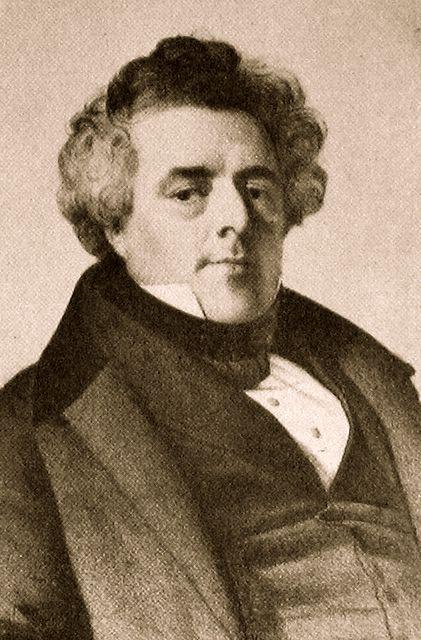
At the age of 12, Rubini started performing as a violinist in Teatro Riccardi in Bergamo, where he also learned tailoring. In 1806, he made his first public appearance as a singer, performing in a female role in his hometown. Rubini's vocal talent did not go unnoticed, and he continued his music education until the age of 18. In 1812, he performed as a violinist and chorus member at Teatro Riccardi, and the following year, he became a second tenor in Palazzolo sull'Oglio. At the age of 19, Rubini anonymously debuted as a chorister at La Scala.
The breakthrough for Rubini came in 1814 when he debuted in Pavia and performed one of the leading roles in Pietro Generali's opera "Le lagrime d'una vedova." In 1815, he decided to leave tailoring behind and fully dedicate himself to his opera career. In 1821, Rubini married French opera soprano Adelaide Chaumel, who changed her stage name to Adelaide Comelli. They performed numerous duets together.
International Success
After spending sixteen years in Naples from 1815 to 1831, where Rubini achieved impressive success during his tours in France in 1825-1826 with operas by Gioachino Rossini, he moved to Paris. He performed in operas such as "La Cenerentola," "Otello," and "La Donna del lago," dividing his time between Paris during the fall and winter seasons and London during the spring. Additionally, he performed in Vienna, Madrid, Brussels, Bordeaux, Berlin, St. Petersburg, and Moscow.
Collaboration with Vincenzo Bellini
Rubini developed a special relationship with composer Vincenzo Bellini, which started with the opera "Bianca e Gernando" in 1826 and continued with "I puritani" in 1835. He became one of the four performers, along with Giulia Grisi, Antonio Tamburini, and Luigi Lablache, for whom "I puritani" was composed.
Later Life and Legacy
Rubini was made an honorary member of the Accademia Filarmonica di Bologna, and in 1845, after returning from Russia, he retired at the height of his fame. He had amassed a considerable fortune before age-related changes affected his voice. Rubini passed away on March 3, 1854, in his hometown of Romano di Lombardia and was buried in the local cemetery. A large marble monument stands at the legendary artist's grave.


