Giovanni Gronchi
 Italy
ItalyBiography of Giovanni Gronchi
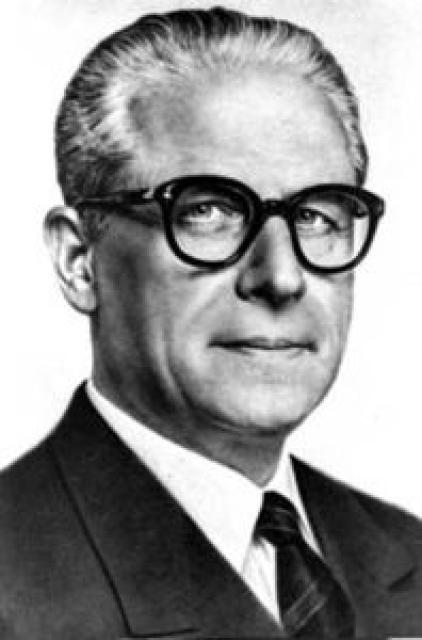
Giovanni Gronchi was an Italian politician who served as the President of Italy from 1955 to 1962. His presidency was marked by the unsuccessful integration of left-wing party movements into the Italian government.
Early Life and Career
Giovanni Gronchi was born in September 1887 in Pontadera, Tuscany. He became one of the first members of the Christian movement in Italy, founded by Catholic priest Romolo Murri in 1902. Gronchi obtained his first degree in literature and philosophy from the Higher Normal School of Pisa. From 1911 to 1915, he worked as a teacher in several cities in Italy, including Parma, Massa, Bergamo, and Monza.
With the outbreak of World War I, Gronchi volunteered for the front and became one of the founders of the Italian People's Party after the war ended in 1919. He was elected as a deputy from Pisa to the Italian Parliament in 1919 and 1921. During this time, he also led the Italian Confederation of Christian Workers and served as the Deputy Minister of Industry and Commerce in the first government of Benito Mussolini from 1922 to 1923.
However, in April 1923, the National Assembly of the People's Party in Turin decided to remove all party representatives from government positions, including Giovanni Gronchi. After this, he returned to his role as a labor leader and frequently faced the violence of fascist squads.
Political Career
In 1924, after Luigi Sturzo resigned as the secretary of the People's Party, Gronchi assumed the position along with two other prominent party figures. In the same year, he was re-elected to Parliament and joined the anti-fascist opposition, known as the Aventine Movement. In 1926, with the advent of the new regime, Gronchi was expelled from Parliament.
From 1926 to 1943, Gronchi chose to end his political career rather than join the fascist party. During these years, he earned a living by running his own business, initially as a salesman and later as an industrialist. In 1943-1944, he was one of the founders of the new Christian Democratic Party and became the leader of the left-wing faction along with Giorgio La Pira, Giuseppe Dossetti, and Enrico Mattei. He also represented his party in the Multi-Party Committee of the Italian Resistance.
Although Gronchi often clashed with many representatives of his own party, including its Secretary-General Alcide De Gasperi, he managed to rise through the ranks of the new Italian government. He served as the Minister of Industry from 1944 to 1946 and was elected to the Constituent Assembly in 1946. From 1948 to 1955, Gronchi was the President of the Chamber of Deputies in Italy.
Presidency and Legacy
In 1955, the term of Italy's first president, Luigi Einaudi, came to an end, and the parliament was tasked with electing his successor. The new Secretary of the Christian Democratic Party, Amintore Fanfani, supported liberal Cesare Merzagora, who was leading the country's Senate at the time. However, the far-right parties, led by Giuseppe Pella, Giulio Andreotti, Guido Gonella, and Salvatore Skoka, joined forces with left-wing leaders Giovanni Pastore, Giorgio Bo, and Achille Marazza in a revolt against the party leadership to promote Giovanni Gronchi.
After lengthy debates and the eventual collapse of the centrist front, Giovanni Gronchi was elected as the President of Italy on April 29, 1955, receiving 658 votes and 883. His presidency was characterized by his efforts to gradually open the government to left-wing parties, allowing socialists and communists to participate. He also pursued an active policy against Italy's entry into NATO, but faced strong opposition from liberal parties.
Gronchi's left-wing policies led to serious consequences. In 1960, mass riots broke out in many cities in Italy, particularly in Genoa, Licata, and Reggio Emilia, where the police fired on demonstrators, resulting in the deaths of five people. As a result, Prime Minister Fernando Tambroni and his Christian Democratic government were forced to resign in disgrace. This tarnished the reputation of Giovanni Gronchi, and he was considered an unsuccessful president until the end of his term in 1962.
After his presidency, Gronchi attempted to secure a second term in 1962 with the support of Enrico Mattei but failed. Antonio Segni was elected as the president, and according to the Italian constitution, Gronchi became a lifetime senator. He passed away in Rome in October 1978 at the age of 91.