Giselher Klebe
 Germany
- Giselher Wolfgang Klebe: A Prolific German Composer
- Wartime and Post-War Education
- Compositional Career
- Academic Appointment and Awards
- Personal Life and Legacy
Giselher Wolfgang Klebe: A Prolific German Composer
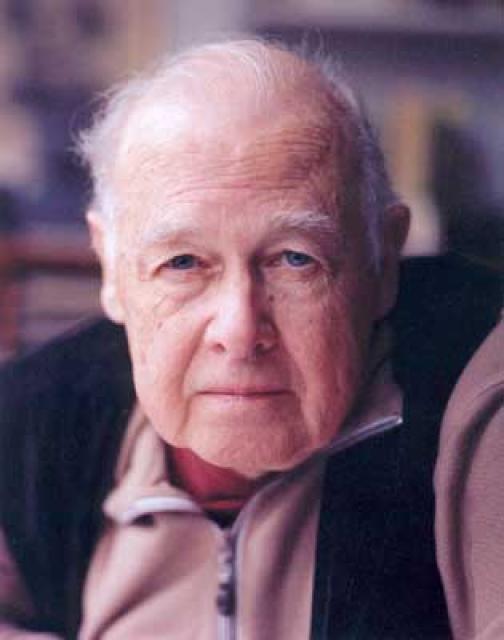
Early Life and Musical EducationGiselher Wolfgang Klebe was born on June 28, 1925, in Mannheim, Germany. He received his early musical training from his mother, Gertrud Klebe, a violinist. In 1932, the family moved to Munich, where he continued his studies with his maternal aunt, Melanie Michaelis. The family relocated again in 1926 to Rostock due to their father's profession. After his parents separated, Klebe moved to Berlin to live with his mother and sister. By the age of thirteen in 1938, he had sketched his first compositions.
Wartime and Post-War Education
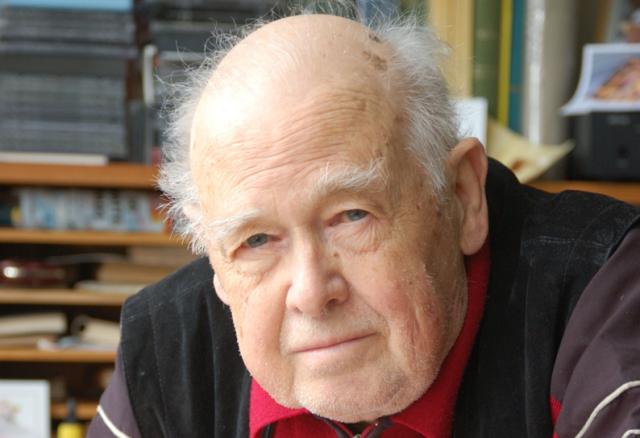
In the 1940s, Klebe underwent intensive training in violin, viola, and composition. After mandatory imperial labor service, he was drafted into the military as a telegraphist. Upon Germany's surrender, Klebe was taken prisoner by Russian forces and eventually released due to ill health. Upon recovering, he resumed his musical studies in Berlin from 1946 to 1951, first under Joseph Rufer and later under Boris Blacher.
Compositional Career
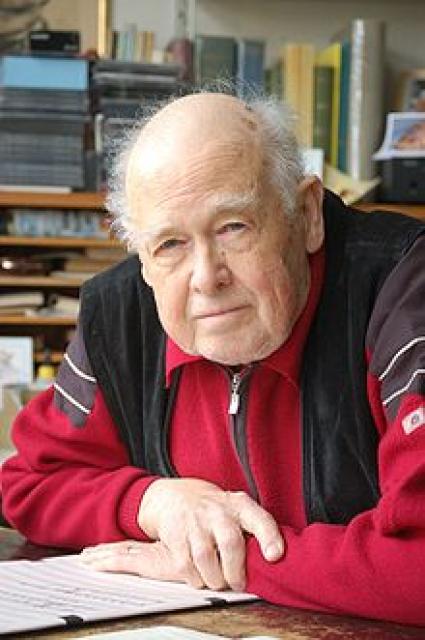
Klebe worked for a time at 'Berliner Rundfunk' before devoting himself entirely to composition. He drew inspiration from the works of writers and painters, particularly his contemporaries. In 1951, he composed 'Die Zwitschermaschine Op. 7,' based on Paul Klee's famous painting 'The Twittering Machine.' His first opera, 'Die Räuber' (The Robbers), premiered in 1957, based on Friedrich Schiller's play. He also wrote two operas based on plays by Ödön von Horváth.
Academic Appointment and Awards
In 1957, Klebe succeeded Wolfgang Fortner as an associate professor at the Hochschule für Musik Detmold. He was appointed a full professor in 1962 and taught numerous students throughout his tenure. Many of his students went on to become notable composers, including Theo Brandmüller, Matthias Pintscher, and Lars Woldt. In 1964, Klebe became a member of the Akademie der Künste in West Berlin, and a year later, he received the Westfälischer Musikpreis (now known as the Hans-Werner-Henze-Preis). In 2002, the city of Detmold, where he resided, made Klebe an honorary citizen.
Personal Life and Legacy
Klebe married violinist Lore Schiller on September 10, 1946. They had two daughters, Sonja Katharina and Annette Marianne. Lore wrote librettos for some of Klebe's operas, including 'Der Jüngste Tag.' Giselher Wolfgang Klebe passed away at the age of 85 on October 5, 2009, in Detmold, after a long illness caused by liver cancer. He left behind a prolific legacy of over 140 musical works that continue to be performed and studied.