Giuseppe Vermiglio
 Italy
Italy- Early Life and Education
- Roman Sojourn: Caravaggism and Legal Troubles
- Return to Northern Italy: Mature Style and Success
- Critical Reception and Legacy
- Notable Works
- - Cain and Abel, National Museum of Fine Arts, Valletta
- - Last Supper (1622), Pinacoteca di Brera, Milan
- - Giuditta e Oloferne, Pinacoteca Ambrosiana, Milan
Early Life and Education
Born around 1590 in Alessandria, Northern Italy, Giovanni Francesco Barbieri, better known as Il Guercino ("the squint-eyed"), was a prolific Baroque painter. While details of his early life are scarce, art historians speculate that he received training in Bologna, where he absorbed influences from Annibale Carracci and Guido Reni.
Roman Sojourn: Caravaggism and Legal Troubles
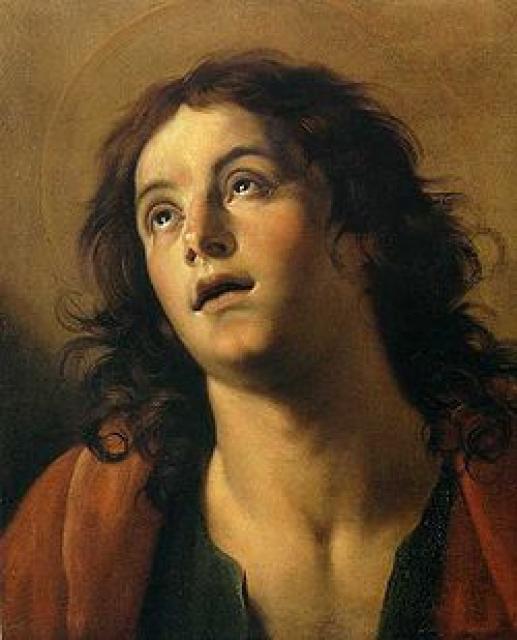
In the early 17th century, Guercino relocated to Rome, the thriving center of the arts. There, he fell under the spell of Caravaggio's revolutionary chiaroscuro technique, characterized by stark lighting and heightened realism. Guercino's own style emerged as a synthesis of Caravaggio's tenebrism and the softer forms of the Bolognese School.
However, Guercino's tenure in Rome was not without its share of drama. He gained a reputation for pugnacity and was twice imprisoned: once for carrying an unauthorized sword and another for assaulting fellow artist Silvio Olivieri. In 1618, he registered as a picture dealer in Rome.
Return to Northern Italy: Mature Style and Success
Around 1620, Guercino returned to Northern Italy, where he established himself as a leading painter. He mainly worked in Piedmont and Lombardy, with notable commissions in Milan and Mantua. Guercino's mature style became more refined, combining Caravaggio's intensity with a greater emphasis on color and composition.
Critical Reception and Legacy
Guercino's artistic legacy has been subject to varying interpretations. While some, like Alfred Moir, dismissed him as a "not unimportant craftsman," Lanzi hailed him as "the best oil painter that Piedmont has produced, and not inferior to the foremost of Italy."
Notable Works
Guercino's notable works include:- The Incredulity of St. Thomas (1612), San Tommaso ai Cenci, Rome
- Crowning with Thorns / Mocking of Christ, Palazzo Altieri, Rome (?)
- Cain and Abel, National Museum of Fine Arts, Valletta
- Adoration of the Shepherds (1622), Pinacoteca di Brera, Milan
- Last Supper (1622), Pinacoteca di Brera, Milan
- The Sacrifice of Isaac, Musei Civici del Castello Sforzesco, Milan
- Saint Sebastian with an Angel, Musei Civici del Castello Sforzesco, Milan