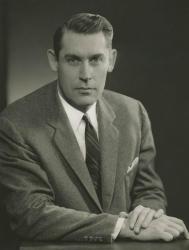
Glenn Hammond Curtiss
 USA
USAGlenn Hammond Curtiss: Biography of an Aviation Pioneer
Glenn Hammond Curtiss, an American aviation pioneer, was born on May 21, 1878, in Hammondsport, New York. Despite only completing eight grades of education, Curtiss showed a keen interest in mechanics and inventions from an early age. He first demonstrated his mechanical skills while working in Rochester, where he devised a way to use a machine for making stencils at a factory and later invented a basic camera for studying photography.

On March 7, 1898, Curtiss married Lena Pearl Neff, and they had two children together. Their first child, Carlton N. Curtiss, sadly passed away in infancy, but their second child, Glenn Hammond Curtiss Jr., lived from 1912 to 1969.

Curtiss began his career as a bicycle racer and owned a bicycle shop. In 1901, as internal combustion engines became more accessible, he became fascinated with motorcycles. He started building motorcycles with single-cylinder engines as early as 1902. For his first carburetor, Curtiss used a tomato soup can, and he used cheesecloth as a fuel filter. In 1903, he set a speed record of 103 km/h on a motorcycle over a distance of 1.6 km, and in 1907, he achieved an unofficial record of 219.45 km/h on a motorcycle he built with an air-cooled engine.

Curtiss began supplying engines to California "aeronaut" Tom Baldwin in 1904. That same year, Baldwin's airship, the "California Arrow," took flight with a Curtiss motor. Alexander Graham Bell, who considered Curtiss the "greatest motor expert in the country," invited him to join the Aerial Experiment Association (AEA) research group. Between 1908 and 1910, the AEA built four aircraft, each one an improvement on its predecessor. Curtiss played a significant role in the development of the third model, known as the "June Bug," and became its test pilot. On July 4, 1908, Curtiss flew the "June Bug" a distance of 1550 meters, winning the Scientific American Trophy and a $2500 cash prize.
In 1909 and 1910, Curtiss hired several pilots to demonstrate the capabilities of his airplanes. These competitions and exhibition flights across North America generated widespread public interest in aviation. On May 29, 1910, Curtiss flew from Albany to New York City, making the first international flight between two major American cities, covering a distance of 220 km. He received a promised $10,000 reward from publisher Joseph Pulitzer and, in 1911, obtained the first pilot's license issued in the United States.
On November 14, 1910, Curtiss' pilot, Eugene Ely, made the first successful takeoff from a temporary platform on the front deck of the USS Birmingham, marking the beginning of Curtiss' close collaboration with the military. By the end of 1910, Curtiss established a winter camp in San Diego, where he trained military personnel in aviation. Lieutenant Theodore Ellyson, who became known as "Naval Aviator #1," trained under Curtiss during this period. Curtiss also developed pontoons for water takeoff and landing during this time. On January 26, 1911, the first hydroplane in the United States took flight. Six months later, Curtiss sold his first aircraft to the U.S. Navy. The "A-1 Triad," which had both wheels and pontoons, earned Curtiss the Collier Trophy. The "A-1 Triad" was also purchased by the Russians, Japanese, Germans, and British.
In 1912, Curtiss completed work on the large two-seat flying boat, the "Flying Fish," which had its lower hull submerged in water. In 1914, his collaboration with former British naval officer John Cyril Porte resulted in the creation of the large twin-engine flying boat, the "America," specifically designed for transatlantic flights. In 1916, as the United States approached its entry into World War I, the U.S. Signal Corps commissioned Curtiss to develop a simple, lightweight, and easy-to-fly training aircraft. He created the JN-4 "Jenny" and the N-9 hydroplane. These aircraft were in high demand by the military and civilians in the United States, Canada, and the United Kingdom. Curtiss' aircraft company grew to employ 18,000 workers in Buffalo and 3,000 in Hammondsport.
In 1917, the U.S. Navy hired Curtiss to design large four-engine flying boats capable of carrying a crew of five. The resulting model, known as the "Curtiss NC," successfully crossed the Atlantic in 1919. The "Curtiss NC-4" is now on display at the National Museum of Naval Aviation in Pensacola, Florida.
The patent dispute between the Wright brothers and Curtiss, which began in 1909, remained unresolved during World War I. The U.S. government desperately needed combat aircraft, and the Wright brothers' "Model L" remained the only viable option. Pressure was placed on the Wright brothers and Curtiss to settle their dispute and focus on more pressing matters.
The U.S. government entered into a significant contract with Curtiss for the production of aircraft for the U.S. Army. However, with the onset of peace, the contract was canceled. In September 1920, the Curtiss Aeroplane and Motor Company underwent financial reorganization. Curtiss cashed out his shares in the company for $32 million but continued to hold the position of director, serving mainly as a design consultant.
Control of the company passed to Clement M. Keys, and the Curtiss Aeroplane and Motor Company eventually became the core of a larger aviation group. In the 1920s, Curtiss and his family moved to Florida. His hunting trips in the Everglades led to his final invention, the "Adams Motor Bungalo," a precursor to the modern recreational vehicle. The trailer was named in honor of Curtiss' partner and half-brother, Carl Adams.
While attending a legal case in Rochester, where Curtiss was contesting a lawsuit filed by his former business partner, August Herring, he suffered an acute appendicitis attack in court. He passed away on July 23, 1930, in Buffalo, New York, from complications following an appendectomy.
In 1933, Curtiss was posthumously awarded the Distinguished Flying Cross. His name was also enshrined in the National Aviation Hall of Fame in 1964, the American Motor Sports Hall of Fame in 1990, the Motorcycle Hall of Fame in 1998, and the National Inventors Hall of Fame in 2003.
The Glenn H. Curtiss Museum in Hammondsport, New York, is dedicated to honoring his life and contributions.