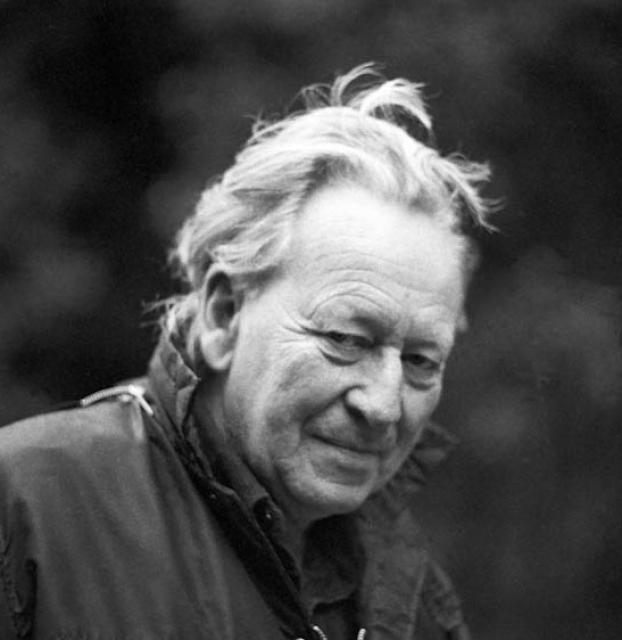
Gregory Bateson
 USA
USABiography of Gregory Bateson
Gregory Bateson was an Anglo-American biologist, anthropologist, and philosopher. He was a staunch advocate for the necessity of an ecological approach to psychology and psychotherapy.
Education and Early Career
Bateson received his secondary education at a charitable school from 1917 to 1921. He then attended St. John's College from 1922 to 1926, where he obtained a Bachelor of Arts degree in Humanities in 1925 and a Master's degree in 1930.
During his time at St. John's College, Bateson worked under the guidance of A. Wilkins. In 1928, he taught linguistics in Sydney, Australia. From 1931 to 1937, he served as a member of the council at St. John's College.
Simultaneously, Bateson participated in numerous ethnographic expeditions. He conducted research in New Britain from 1927 to 1928, in New Guinea from 1929 to 1931 and again from 1931 to 1933, and in Bali from 1936 to 1938. During his expedition in Bali, he worked alongside Margaret Mead, whom he was married to from 1936 to 1950.
Bateson was one of the first researchers to use systematic filming in field ethnographic studies.
Later Career and Contributions
In 1940, Bateson relocated to the United States, where he focused on teaching. He delivered guest lectures at the New School for Social Research in 1946, Harvard University in 1948, and the Medical College of the University of California in 1948. During this time, he began working on the problem of schizophrenia, culminating in the publication of "Toward a Theory of Schizophrenia" in the journal "Behavioral Sciences" in 1956, among other works.
From 1962 to 1964, Bateson served as the Director of Research at the Institute for Communication Research (ETHOL). He was also a member of the leadership team at the Mental Research Institute in Palo Alto. Additionally, he was a member of the Royal Institute of Intercultural Studies and the American Anthropological Society.
As a theorist, Bateson was influenced by the ideas of Bertrand Russell and Ludwig von Bertalanffy. He advocated for the psychological approach of "new communication," in which humans are seen as playing their bodies in a collective orchestra. He examined the biosphere from the perspective of quantum physics.
Bateson's ideas were crucial in the development of the hypothesis of "double bind" within the schizophrenia research group at Palo Alto. According to this hypothesis, communication within the family of a schizophrenic individual occurs on two conflicting levels, forcing the individual to choose between them, with negative consequences for every choice made.
Bateson was also the author of the paradoxical intervention psychotherapeutic technique.
In summary, Gregory Bateson was a groundbreaking figure in the fields of biology, anthropology, and philosophy. His work emphasized the importance of an ecological approach to psychology and psychotherapy, and he made significant contributions to the understanding of communication patterns in families affected by schizophrenia.