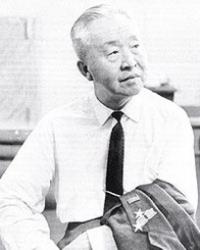
Grigory Evdokimov
- Grigory Evdokimov: A Controversial Soviet Figure
- Exile, Arrests, and Petrograd Agitator
- Civil War and Political Positions
- Zinoviev's Close Associate and Party Troubles
- Secretary of the Central Committee and "Unified Opposition"
- Expulsion, Readmission, and Second Arrest
- Third Trial and Execution
- Rehabilitation and Legacy
Grigory Evdokimov: A Controversial Soviet Figure
Early Life and Revolutionary ActivitiesGrigory Evdokimov was born into a middle-class family in Russia. After completing secondary education, he worked as a sailor at the age of 15. In 1903, he joined the Russian Social Democratic Labour Party (RSDLP) and engaged in revolutionary work among the laborers in Omsk and Pavlodar. His involvement led to his first arrest in 1908.
Exile, Arrests, and Petrograd Agitator
Fleeing police persecution, Evdokimov escaped to St. Petersburg in 1913, where he faced further arrests. In 1915, he was sent into administrative exile in Siberia, from where he managed to escape. Back in Petrograd in 1917, he became an agitator for the Petrograd Committee of the RSDLP(b) and assisted in forming Red Guard units. He was also elected to the All-Russian Constituent Assembly.
Civil War and Political Positions
During the Civil War, Evdokimov participated in establishing Soviet power in northwestern Russia and served as the Commissar of Industry for the Northern Oblast. He actively defended Petrograd and held various military positions. After the war, he chaired the Petrograd Council of Trade Unions (1922-1925) and served as deputy chairman of the Petrograd Soviet and Economic Council under Grigory Zinoviev (1923-1925).
Zinoviev's Close Associate and Party Troubles
As one of Zinoviev's loyal supporters, Evdokimov was deeply involved in the "New Opposition." Despite its defeat at the 14th Congress of the RSDLP(b), Evdokimov and other opposition leaders were retained in the Central Committee. However, the party sent a group to Leningrad to expose their anti-party activities, leading to Evdokimov's resignation as Leningrad party leader in February 1926.
Secretary of the Central Committee and "Unified Opposition"
In January 1926, Evdokimov was appointed Secretary of the Central Committee and transferred to Moscow. Following the merger of Trotskyist and Zinovievist supporters in 1926, he became an active participant in the "Unified Opposition." He was subsequently removed from party leadership and expelled from the Central Committee in 1927.
Expulsion, Readmission, and Second Arrest
From 1927 to 1928, Evdokimov worked in minor positions. In June 1928, he recanted his errors and was readmitted to the party. However, his political career ended abruptly in 1934 when he was expelled and arrested as part of the "Moscow Center" trial. Accused of conspiring with others to assassinate Sergei Kirov, he was sentenced to eight years in prison in 1935.
Third Trial and Execution
In 1936, Evdokimov was again put on trial in the "Anti-Soviet Terrorist Center" case and sentenced to death. He was executed shortly after.
Rehabilitation and Legacy
In 1988, Evdokimov was posthumously rehabilitated and restored to membership in the Communist Party. During the 1920s, the State Workshops of Meteorological and Precision Instruments in Leningrad bore his name.