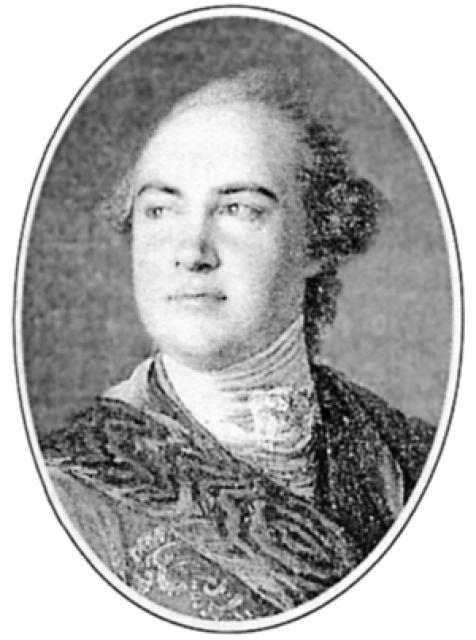
Kirill Razumovskiy
 Russia
- Kyrylo Razumovsky: The Last Hetman of Little Russia
- Rise to Prominence
- Hetman of Little Russia
- Reforms and Opposition
- Involvement in the Coup d'État
- Retirement and Later Years
Kyrylo Razumovsky: The Last Hetman of Little Russia
Early Life and EducationKyrylo Razumovsky (1728-1803) was born into a peasant family in Ukraine. In his childhood, he tended his father's cattle. After his older brother Alexei's rise to prominence, Kyrylo received a basic education. In 1743, Alexei sent Kyrylo to study abroad in Germany and France, accompanied by a tutor from the Imperial Academy of Sciences.
Rise to Prominence
In 1744, Kyrylo Razumovsky was elevated to the rank of Count. He excelled in his studies with renowned mathematicians and toured France and Italy, returning to St. Petersburg in 1745. His travels transformed him into a sophisticated and charming individual, making him a favorite at the imperial court, particularly among women.
At the age of 18, Razumovsky was appointed president of the Imperial Academy of Sciences due to his exceptional abilities and knowledge. His patroness, Empress Elizabeth, arranged his marriage to her grandniece, Ekaterina Naryshkina.
Hetman of Little Russia
In 1750, Razumovsky was appointed Hetman of Little Russia, marking the restoration of the abolished position. He established his court in Hlukhiv, where he lived extravagantly and entertained lavishly. However, his reign was marked by allegations of favoritism towards his relatives.
Reforms and Opposition
Razumovsky initiated reforms in judicial and alcohol production. He also attempted to strengthen the authority of the Hetman's office. However, the empress restricted his power through a series of decrees, appointing a resident general to monitor his actions and limiting his authority in various areas.
Involvement in the Coup d'État
Razumovsky played a key role in the coup d'état that brought Catherine II to power in 1762. As commander of the Izmailovsky Guards Regiment, he rallied support for the new empress.
Retirement and Later Years
In 1763, Razumovsky returned to Little Russia and resumed his reform efforts. He attempted to negotiate the hereditary succession of the Hetmanate within his family, which angered the empress and led to the abolition of the Hetmanate in 1764. Razumovsky received the rank of General-Field Marshal and extensive landholdings in Little Russia.
Despite his shortcomings, Razumovsky is remembered as a controversial but significant figure in Ukrainian history. His rule, while burdensome to the common people, included some notable reforms. He also symbolized the complex relationship between the Russian Empire and the autonomous region of Little Russia.



