Grigory Ilyinsky
- Early Life and Education
- Academic Career
- Scientific Contributions
- Academic Honors and Associations
- Persecution and Death
Early Life and Education
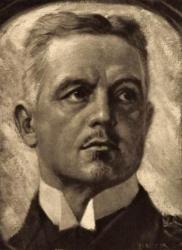
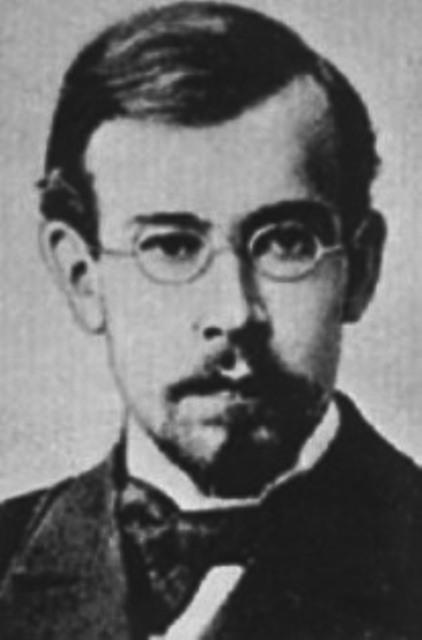
Gavriil Aleksandrovich Ilyinsky, a Russian and Soviet philologist, historian, and archaeographer, was born as the son of a Privy Councillor. He completed his secondary education at the 6th St. Petersburg Gymnasium and then enrolled in the Faculty of History and Philology at St. Petersburg University, graduating with a gold medal in 1899.
Academic Career
After graduating, Ilyinsky was appointed to the Department of Slavic Philology to prepare for a professorship. He embarked on a foreign research trip from 1901 to 1903, studying at universities in Prague, Leipzig, and Vienna, and conducting archival research. Upon his return, he taught at St. Petersburg University and later at the universities of Kharkov, Yuryev, Saratov, Kazan, and Moscow. He attained the rank of professor in 1909 and earned a doctorate in philology in 1911.
Scientific Contributions
Ilyinsky's primary scholarly interest was the ancient history of Slavic languages. His monumental work "Protoslavic Grammar" (1916) laid the foundation for contemporary understanding of the Proto-Slavic language. He also made significant contributions as a publisher of Slavic literary monuments from the 11th to 13th centuries.
Academic Honors and Associations
In 1921, Ilyinsky was elected as a Corresponding Member of the Russian Academy of Sciences. He also received recognition from the Bulgarian Academy of Sciences (1929) and the Polish Academy of Sciences (1930).
Persecution and Death
Tragically, Ilyinsky's life took a dark turn in 1934 when he was arrested on false charges by the NKVD (Soviet secret police). Sentenced to ten years in labor camps, he was incarcerated in the Solovki Islands. His imprisonment was later commuted to exile, and he was released in 1936 and settled in Tomsk. However, in 1937, he was arrested again and executed. Many of his later scholarly works were irreversibly lost. Ilyinsky remains a revered figure in Slavic philology, despite the tragic circumstances that cut short his life and research.