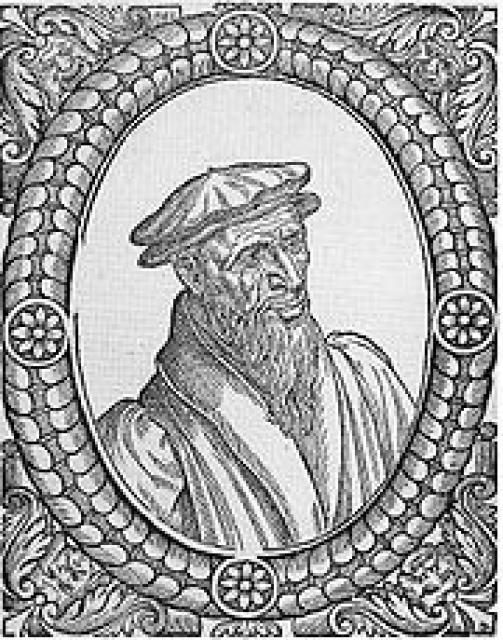
Guillaume Farel
 France
- Early Life and Education
- Conversion and Conflict
- Mission and Reform
- Geneva and Collaboration with Calvin
- Exile and Later Life
- Legacy and Impact
Early Life and Education
Born in Dauphiné, France, to an affluent noble family, Guillaume Farel was destined for a military career. However, he defied his father's wishes and pursued education. Arriving in Paris, he became a teacher at a college. Initially a devout Catholic, Farel's study of the Bible sowed seeds of doubt.
Conversion and Conflict
Farel's exploration of Greek and Hebrew led him to reject Catholicism. He faced persecution for his beliefs, fleeing to Meaux in 1521, where he became a vocal critic of the Catholics. In 1524, he defended his 13 theses against Catholicism in Basel, where he befriended Oecolampadius but clashed with Erasmus.
Mission and Reform
Following Erasmus' efforts to expel him, Farel traveled to Zürich and Bern, meeting Zwingli before settling in Strasbourg, where he collaborated with Bucer and Capito. At Oecolampadius' urging, he preached in Montbéliard, gathering followers but provoking Catholic hostility. In 1528, he played a key role in introducing the Reformation in Bern and neighboring cities.
Geneva and Collaboration with Calvin
In 1532, Farel was sent as a delegate to a synod of Waldensian churches. Stopping in Geneva, his sermons attracted a sizable audience. Despite Catholic opposition, Farel returned in 1534, capitalizing on the city's recent liberation from episcopal authority and its alliance with Bern. His preaching and efforts to organize the Genevan church met with success, although Catholic resistance continued.
In 1536, Farel collaborated with the newly arrived John Calvin. Farel recognized Calvin's organizational skills and convinced him to remain in Geneva. Together, they proposed the Articles of 1537, which established a Reformed church in the city. However, Farel's more moderate views on excommunication clashed with Calvin's strict approach.
Exile and Later Life
In 1538, opposition to Calvin and Farel led to their exile. Farel initially joined Calvin in Strasbourg but later moved to Neuchâtel, where he reformed the local church. He also preached in Metz and faced persecution by Catholic authorities. In 1543, Farel returned to Neuchâtel, becoming its pastor.
Despite his advanced age, Farel married Marie Torel in 1558. He made one last visit to Geneva in 1564 to bid farewell to the dying Calvin. Farel continued to intervene in religious matters, including the execution of Servetus. His death in 1565 marked the end of a remarkable life dedicated to the spread of Protestantism.
Legacy and Impact
Guillaume Farel was a pivotal figure in the Swiss Reformation. A man of action rather than theory, he possessed an unwavering faith and a deep belief in the simplicity of true religion. His fiery preaching, missionary zeal, and relentless activism made him a formidable champion of Calvinism. His influence extended beyond Switzerland, reaching French Protestants and Waldensian communities. Farel's legacy lies in his role as a catalyst for religious change and his contribution to the establishment of Reformed churches throughout Europe.


