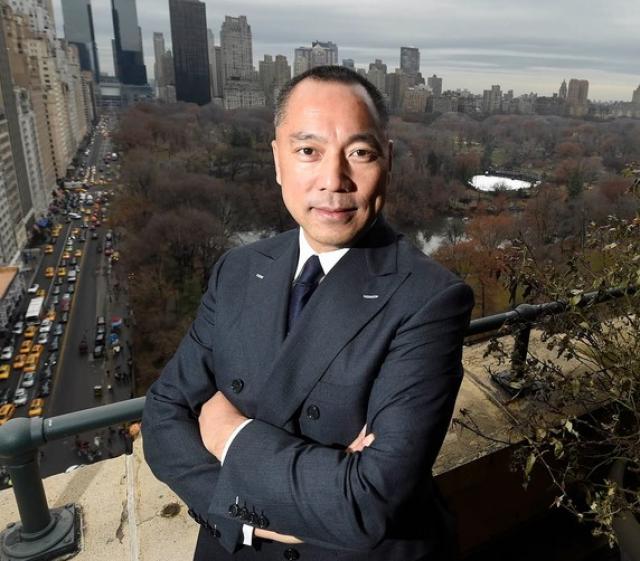
Guo Wengui
 USA
- From Shandong to China’s property boom
- Exile and online activism
- Federal case and conviction
- Public image and legacy
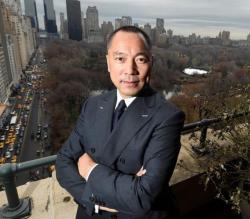
Guo Wengui built a public life around two sharply different identities: a property tycoon who rose through China’s booming real-estate sector, and an exiled critic who promised to expose corruption inside the Chinese Communist Party. In the United States, his online following and political alliances brought him fame, but also intense controversy. A federal jury later convicted him of leading a major fraud scheme, and in 2026 he received a 30-year prison sentence while appealing the judgment.
From Shandong to China’s property boom
Born in Shandong Province on 5 October 1968, Guo grew up far from the centers of China’s political and financial elite. He later entered business during the country’s rapid economic expansion, building a career in property development and investment. His projects included Beijing’s Pangu Plaza, a prominent complex combining offices, residences, and a hotel. By the early 2010s he had become one of China’s better-known property magnates and was counted among its wealthiest people.
His business career was also linked to powerful political figures. One of his close associates was Ma Jian, a senior state-security official who was later investigated and imprisoned in China. As an anti-corruption campaign gathered pace, scrutiny turned toward Guo and his relationships with officials. He left China in 2014 and settled in the United States. Guo described himself as a target of political persecution and sought asylum; Chinese authorities, meanwhile, pursued investigations and accused him of crimes. Those sharply different accounts became central to his public persona.
Exile and online activism
In New York, Guo reinvented himself as a high-profile opponent of the Chinese Communist Party. Beginning in 2017, he used livestreams and online media to make allegations about corruption among China’s political and business elite. His supporters treated him as a whistleblower with inside knowledge; critics questioned his credibility and the accuracy of some of his claims. His media presence made him a polarizing figure in Chinese-language politics and drew attention from audiences well beyond the Chinese diaspora.
Guo built a network of ventures that blended media, political organizing, fundraising, and investment offerings. He and former Trump adviser Steve Bannon announced the New Federal State of China in 2020, presenting it as a movement seeking to replace Communist Party rule. Guo also promoted the Rule of Law Foundation and Rule of Law Society, as well as investment and membership programs connected to the GTV media platform, the Himalaya Exchange, and G|CLUBS. The campaigns drew contributions from followers who believed they were supporting political change or participating in business opportunities.
Federal case and conviction
U.S. authorities arrested Guo in New York in March 2023. Prosecutors alleged that he and associates had solicited money through a series of offerings by making false claims about how funds would be used, then diverted hundreds of millions of dollars to support his lifestyle and acquire luxury properties and vehicles. Guo denied wrongdoing and cast the prosecution as politically motivated. The case was tried before a jury in the Southern District of New York.
On 16 July 2024, after a seven-week trial, the jury convicted him on nine federal counts, including racketeering conspiracy and conspiracies involving wire fraud, securities fraud, and money laundering. The jury acquitted him on three other counts. Judge Analisa Torres sentenced him on 29 June 2026 to 30 years in prison and ordered forfeiture of approximately $889 million in proceeds, along with interests in specific property. Guo filed an appeal in July 2026, challenging both his conviction and sentence; the appeal remained pending in the latest available public reporting.
Public image and legacy
To supporters, Guo’s broadcasts and anti-Communist campaign made him a resistance figure who had broken with the Chinese establishment. To prosecutors and many investors who testified in court, he was a charismatic promoter who used political loyalty to attract money through misleading schemes. His conviction has reshaped that public image, though his appeal means the legal process continues. His rise—from property development in China to a political media operation in exile—remains closely tied to the volatile intersection of wealth, propaganda, dissident activism, and online fundraising.