Gustav Horn
 Sweden
- Johan Banér: A Distinguished Swedish Field Marshal
- Military Training and Overseas Journey
- Diplomatic and Military Service
- Participation in Wars and Promotions
- Thirty Years' War: Close Confidant to King
- Continued Success and Captivity
- Later Years and Honors
- Personal Life
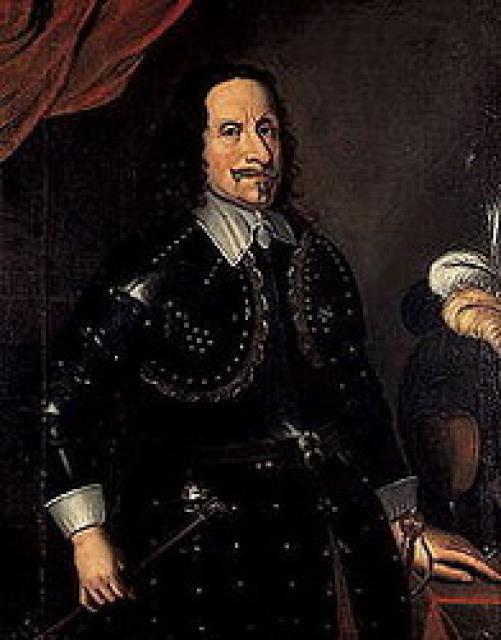
Johan Banér: A Distinguished Swedish Field Marshal
Early Life and EducationJohan Banér, a prominent Swedish field marshal, was born into a noble family in 1596. He received his education under the guidance of renowned astronomer and astrologer Sigfridus Aronus Forsius. Banér's early years shaped his intellectual curiosity and laid the foundation for his future military career.
Military Training and Overseas Journey
Embarking on an overseas journey from 1609 to 1612, Banér pursued his intellectual interests. He attended universities in Rostock, Jena, and Tübingen, expanding his knowledge in various fields. Subsequently, he gained valuable military experience under his brother, Evert Horn, during the Swedish intervention in Russia.
Diplomatic and Military Service
Returning to Sweden in 1614, Banér departed for the Netherlands to study military tactics under the esteemed Maurice of Nassau. In 1618, he became a Chamberlain to King Gustavus II Adolf, serving as a trusted diplomatic emissary. Banér played a key role in arranging the king's marriage to Maria Eleonora of Brandenburg.
Participation in Wars and Promotions
Appointed Colonel of the Norrland Regiment in 1621, Banér actively participated in the Polish-Swedish War. During the siege of Riga, he sustained severe injuries. From 1625 to 1628, he collaborated with Jacob De la Gardie in successfully defending Livonia from Polish forces. Banér's military acumen was recognized with his appointment as a member of the Riksråd (Council of the Realm) in 1625 and as field marshal in 1628.
Thirty Years' War: Close Confidant to King
With Sweden's entry into the Thirty Years' War in 1630, Banér emerged as one of King Gustavus II Adolf's most trusted allies. The king held Banér in high esteem, often referring to him as his "right-hand man." Commanding the left flank at the Battle of Breitenfeld in 1631, Banér played a crucial role in the Swedish victory.
Continued Success and Captivity
In subsequent campaigns, Banér demonstrated his exceptional military leadership. He occupied Coblenz and Trier, defeated imperial forces at Wiesloch, and commanded armies in Bavaria. However, in August 1634, he was defeated and captured at the Battle of Nördlingen. Imprisoned for seven years, Banér's determination remained unbroken.
Later Years and Honors
Exchanged for three imperial generals in 1642, Banér returned to Sweden and was appointed Vice-President of the War College in 1643. He commanded Swedish forces in the Danish-Swedish War of 1643-1645. In recognition of his service, Banér received the county of Björneborg in Finland and the barony of Marienburg in Livonia in 1651. He held the prestigious positions of Governor-General of Livonia in 1652 and Riksmarskalk (Marshal of the Realm) from 1653.
Personal Life
Johan Banér married twice, first to Christina Oxenstierna in 1628 and later to Sigrid Bielke in 1643. His legacy as a skilled military strategist and dedicated servant to Sweden endures to this day.