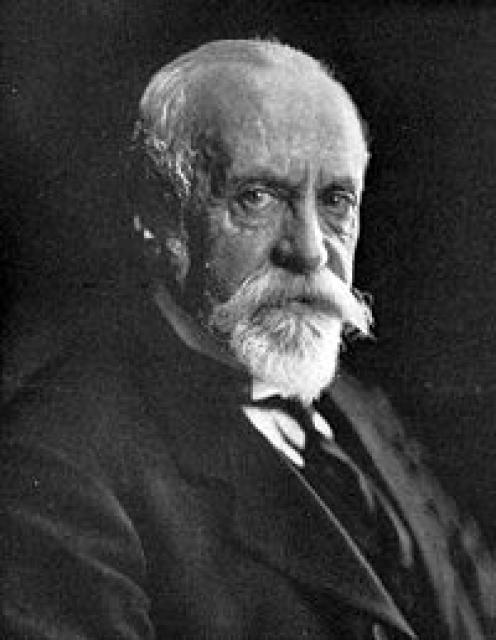
Gustave Ador
 Switzerland
- Early Life and Education
- Political Career in Geneva
- Rise to the Federal Council
- Service as Federal Councillor
- International Humanitarian Work
- Legacy
Early Life and Education
Gustav Ador, a prominent Swiss politician, was born into a wealthy family in Rolle, Switzerland, on 12 December 1845. His father, who owned a commercial bank, provided him with a privileged upbringing. After completing his early education, Ador pursued studies in philology and law at universities in both Reichstadt and Geneva. He earned his licentiate degree in 1868.
Political Career in Geneva
In 1874, Ador embarked on his political career by winning a seat in the Grand Council of Geneva as a conservative-liberal candidate. Over the next four decades, he held various positions in the Geneva government, including serving on the State Council, which headed the canton's finance department. Despite his involvement in federal politics, he maintained his seat in the Grand Council until 1915.
Rise to the Federal Council
Ador's national political aspirations took several attempts to materialize. As a member of the minority party in the Federal Assembly, he faced difficulty in securing election to the Federal Council. In 1917, at the age of 72, he finally triumphed, earning a landslide victory in the first round of voting. His age and relative obscurity proved to be advantageous factors in his election.
Service as Federal Councillor
Ador's two and a half years as a Federal Councillor were marked by a series of diplomatic initiatives. As head of the Political Department and the Interior Ministry, he played a pivotal role in Switzerland's foreign policy. He represented Switzerland at the 1919 Paris Peace Conference, advocating for the establishment of the League of Nations. Ador successfully negotiated the placement of the League's headquarters in Geneva and secured recognition of Switzerland's special status as a neutral country.
International Humanitarian Work
Beyond his political career, Ador dedicated himself to humanitarian causes. In 1870, he joined the International Committee of the Red Cross (ICRC) as a co-opted member. In 1910, he became the organization's third president, a position he held until his death in 1928. During his 18 years as ICRC president, he oversaw its operations during the First World War. Ador's efforts to establish the International Prisoners of War Agency in 1914 significantly enhanced the ICRC's reputation and expanded its international reach. In 1917, the ICRC was awarded the Nobel Peace Prize for its wartime efforts.
Legacy
Gustav Ador's contributions to Swiss politics and international humanitarianism left a lasting legacy. His diplomatic skills and commitment to neutrality played a key role in shaping Switzerland's foreign policy. As president of the ICRC, he strengthened the organization's capacity to provide aid during wartime and promoted the principles of human rights. Ador's memory continues to be honored in Switzerland and beyond as a symbol of humanitarianism and political leadership.