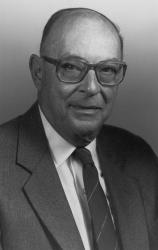
Gyozo Zemplen
 Hungary
- Early Life and Education
- Contributions to Kinetic Theory of Gases
- Breakthroughs in Shock Wave Theory
- Academic Career
- Other Notable Contributions
- Society and War service
Gyula Zemplén: A Pioneer in Fluid Dynamics and Kinetic Theory of Gases
Early Life and Education
Gyula Zemplén was born in Rijeka, Croatia, in 1880. His passion for physics manifested early on, leading him to pursue his studies at the University of Budapest in 1896. As a remarkable student, he won an award for his essay on the viscosity of gases at the age of 19. By 1902, he had conducted significant theoretical and experimental research in the field.
Contributions to Kinetic Theory of Gases
Zemplén's seminal work in 1900 laid the foundation for the kinetic theory of gases, making it a landmark in physics history. He graduated from the university in the same year and remained as a research associate. His appointment as an assistant to Loránd Eötvös in 1902 propelled his research further.
Breakthroughs in Shock Wave Theory
Eötvös sent Zemplén to the universities of Göttingen and Paris for advanced study from 1904 to 1905. In Göttingen, Zemplén developed innovative mathematical theories on shock waves that caught the attention of Felix Klein. Klein recommended his paper for publication in the Encyclopedia of Mathematical Sciences. Utilizing entropy considerations, Zemplén revolutionized shock wave theory with his article "Sur l'impossibilité des ondes de choc négatives dans les gaz" (1905). He established that shock waves must exert pressure on waves propagating only towards regions of lower pressure, a principle now known as the Zemplén law.
Academic Career
After returning from Paris and completing his doctoral thesis in 1905, Zemplén joined the faculties of the University of Budapest (1905) and the Budapest University of Technology (1907). In 1912, he became a professor at the university of technology, where a chair in theoretical physics was specially created for him. Zemplén dedicated himself to training physics teachers and reforming physics education in Hungary.
Other Notable Contributions
In addition to his groundbreaking research, Zemplén authored a textbook on electrodynamics, "Electric Power and its Practical Applications" (1910). He also translated Marie Curie's works on radioactivity into Hungarian and wrote his own book on the subject in 1905. His contributions were recognized with a membership in the Hungarian Academy of Sciences (1908) and the Rózsai Prize in 1911.
Society and War service
Zemplén actively participated in various scientific societies and committees. He was a founding member of the university's football club. During the First World War, Zemplén volunteered for the mortar battery on the Serbian front. Tragically, he succumbed to typhoid fever in 1916, leaving an indelible mark on the scientific world.