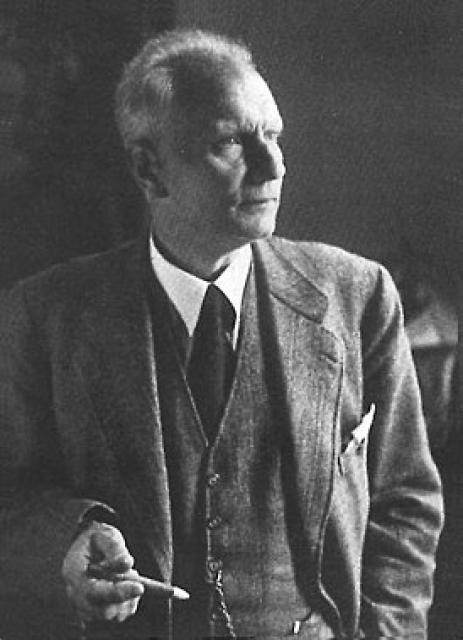
Walther Gerlach
 Germany
Early Life and Education
Walther Gerlach, a renowned German physicist, embarked on his academic journey in 1908 at the University of Tübingen. Under the guidance of Friedrich Paschen, he pursued his doctoral studies, culminating in a dissertation measuring radiation in 1912. Upon completing his doctorate, Gerlach continued his association with Paschen as an assistant from 1911. During his military service from 1915 to 1918, Gerlach earned his habilitation at the University of Tübingen in 1916.
Career Highlights
After serving in World War I, Gerlach traversed various academic positions, beginning as a private lecturer at the University of Tübingen in 1916. He subsequently assumed a similar role at the University of Göttingen in 1917. From 1919 to 1920, Gerlach headed the physics laboratory at Farbenfabriken Elberfeld, formerly known as Bayer-Werke. In 1920, he joined the faculty of Goethe University Frankfurt as an assistant professor and became an extraordinary professor there the following year. In a groundbreaking discovery in November 1921, Gerlach and Otto Stern revealed the spatial quantization of magnetic moments, known as the Stern-Gerlach effect.
Gerlach's career continued to flourish when he became a full professor at the University of Tübingen in 1925, succeeding Friedrich Paschen. In 1929, he moved to Ludwig Maximilian University of Munich as a full professor, taking over from Wilhelm Wien. He held this position until May 1945, when he was apprehended by American and British forces. From 1937 to 1945, Gerlach served on the supervisory board of the Kaiser Wilhelm Society, later influencing the Max Planck Society after 1946.
During World War II, Gerlach played a significant role in Reichsforschungsrat (RFR), the Reich Research Council. He became the head of its physics department on January 1, 1944, and was appointed commissioner for nuclear physics. In April of the same year, he established the Reichsberichte für Physik, an official report publication.
Post-War and Continuing Achievements
Following his internment in France and Belgium by Allied forces after the war, Gerlach returned to Germany in 1946. He was appointed a guest professor at the University of Bonn. In 1948, he assumed the role of full professor of experimental physics and director of the Physics Department at Ludwig Maximilian University of Munich, where he served until 1957. He also held the position of university rector from 1948 to 1951. Gerlach's influence extended beyond academia as well. He served as the founding president of the Fraunhofer Society from 1949 to 1951 and as vice president of the Deutsche Forschungs-Gemeinschaft (DFG) from 1949 to 1961. In 1957, he was among the signatories of the Göttingen Manifesto against nuclear armament in West Germany. Gerlach passed away in Munich in 1979.
Honors and Legacies
Walther Gerlach's contributions to physics earned him numerous accolades. He was awarded the Order of Merit of the Federal Republic of Germany and the Harnack Medal from the Max Planck Society in 1974. The Stern-Gerlach Medal bears his name in recognition of his groundbreaking work.



