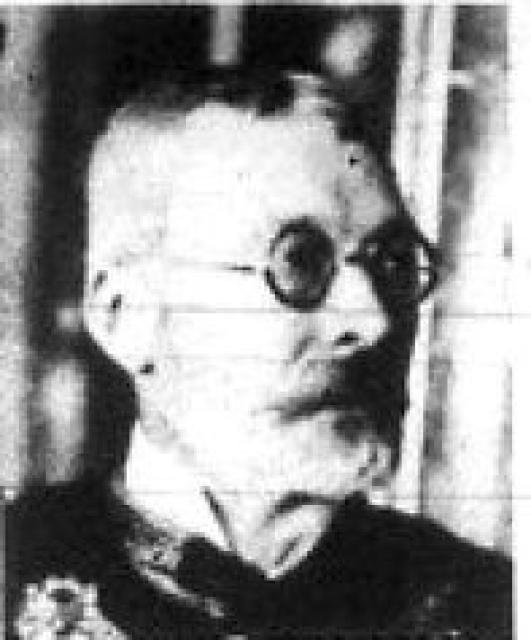
Gyula Karolyi
 Hungary
- Early Life and Military Service
- Hungarian Soviet Republic and Anti-Bolshevik Coalition
- Interwar Period and Rise to Power
- Prime Ministership and Crackdown on Opposition
- Later Years and Death
Early Life and Military Service
Gyula Károlyi was born into a prominent aristocratic family in Hungary. His father was the Speaker of the House of Magnates. Károlyi pursued legal studies at the University of Budapest and continued his education at the universities of Berlin and Bonn. After graduating, he briefly served in the House of Magnates before dedicating himself to farming on his family's estate in Arad County.
With the outbreak of World War I, Károlyi enlisted in the army and fought as a lieutenant in the Hungarian Hussars.
Hungarian Soviet Republic and Anti-Bolshevik Coalition
In 1918, Hungary became a republic and withdrew from the war. Károlyi's cousin, Mihály Károlyi, became its first president. After the establishment of the Hungarian Soviet Republic, Gyula Károlyi attempted to form an anti-Bolshevik government in Arad County, which partly belonged to Transylvania. However, Romanian forces soon forced him to relocate to Szeged. With the support of Mihály Károlyi, Szeged became a major center of the anti-Soviet resistance, with Miklós Horthy appointed as Minister of War. Between May and July 1919, Károlyi served as Prime Minister of the alternative government.
Interwar Period and Rise to Power
In the 1920s, Károlyi retired from politics and focused on farming in northeastern Hungary. In 1927, he became a member of the restored House of Magnates, which had been reestablished a year earlier.
Károlyi's return to government prominence occurred during the Great Depression, which severely impacted Hungary's economy. He served as Minister of Foreign Affairs in István Bethlen's cabinet from 1930 to 1931 and made an official visit to Italy. In August 1931, Bethlen resigned, and Horthy appointed Károlyi as the new Prime Minister.
Prime Ministership and Crackdown on Opposition
After an incident in which the Vienna Express was derailed from a viaduct near Budapest, Károlyi imposed martial law, blaming the catastrophe on communists, and launched a campaign of repression against the opposition. In July 1932, the Central Committee of the Hungarian Communist Party was discovered, and its members were arrested and put on trial. Two of the party's leaders, Imre Sallai and Sándor Fürst, were executed, further weakening the Communist Party.
In an effort to stabilize Hungary's finances, Károlyi implemented austerity measures, reducing social welfare spending and government salaries while raising taxes. Meanwhile, unemployment among industrial and agricultural workers reached 60% in 1932, and the economy remained in dire straits. These policies led to Károlyi's loss of support, and he resigned in September 1932.
Later Years and Death
Károlyi largely withdrew from politics after his premiership. In 1936, he was appointed Privy Councilor. Gyula Károlyi passed away in Budapest in 1947.


