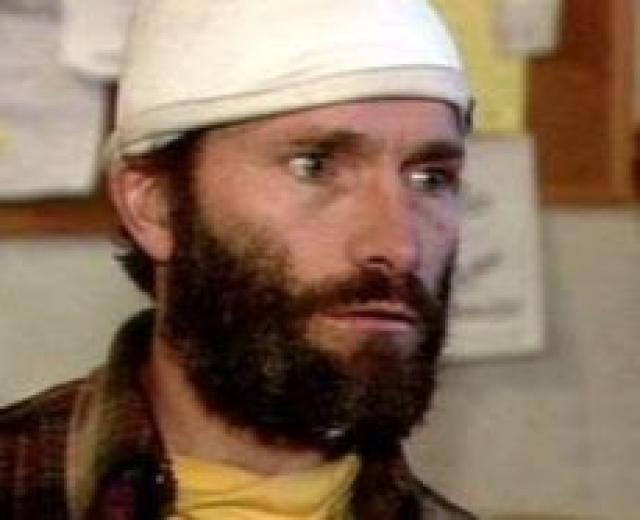
Hadden Clark
 USA
- Early Life and Work
- The Laura Houghteling Case
- The Michele Dorr Case
- Unverified Claims and Public Attention
Hadden Clark is an American convicted murderer whose crimes drew renewed attention decades apart because one victim’s disappearance remained unresolved for years. He pleaded guilty to killing Laura Houghteling in 1992 and was later convicted of killing six-year-old Michele Dorr, who had disappeared in 1986. Clark has also claimed responsibility for other deaths, but those claims have not been established in court.
Early Life and Work
Clark was born in Troy, New York, on July 31, 1952. A 2000 New Yorker profile reported that he experienced developmental difficulties as a child and was diagnosed with a mild form of cerebral palsy. His family moved frequently, and he spent summers in Wellfleet, Massachusetts. As an adult, he served in the Navy and later worked in kitchens and as a gardener. For periods, he had no stable home and slept in his truck or at makeshift camps.
The Laura Houghteling Case
In 1992, Clark was working occasional yard jobs for the Houghteling family in Bethesda, Maryland. Laura Houghteling, 23, returned home after college and disappeared in October. Clark pleaded guilty to her second-degree murder in June 1993. He led investigators to her grave and received a 30-year prison sentence. At sentencing, the judge described him as a grave danger to the community. He was also serving a sentence for an unrelated theft.
The Michele Dorr Case
Michele Dorr vanished at age six in May 1986 while staying with her father in Silver Spring, Maryland. Clark was living nearby at the time. In October 1999, a jury convicted him of her second-degree murder, despite the fact that her remains had not yet been found. After his conviction, Clark cooperated with investigators and led them to a wooded ravine where police recovered Dorr’s remains in January 2000. Maryland’s Court of Special Appeals upheld the conviction in 2001.
The case became notable both for the long delay before Dorr’s remains were located and for the difficult legal path to conviction. The state had brought charges without a body, and the conviction rested on evidence and testimony reviewed at trial and on appeal. The court record confirms the conviction and the later recovery of her remains.
Unverified Claims and Public Attention
While imprisoned, Clark told fellow inmates and investigators that he had killed other women. Police explored several leads, including cases in Massachusetts, but authorities did not confirm those accounts. His claims attracted sustained media attention, and a 2000 New Yorker feature examined the investigation while emphasizing the uncertainty surrounding alleged additional victims. The label “serial killer” has often been applied to Clark in media coverage, but the established convictions remain the two Maryland murders.
Clark’s story returned to public view with Born Evil: The Serial Killer and the Savior, a 2024 documentary series. By then, he was still serving consecutive prison sentences in Maryland. The renewed coverage has kept attention on a case that is as much about prolonged investigative uncertainty and the limits of confession as it is about the crimes themselves.