Hadji Ali
 Egypt
Egypt- From Street Performer to Acclaimed Artist
- The Human Fountain's Extraordinary Acts
- Legacy and Influence
- Passing and Legacy
Haji Ali - The Amazing "Human Fountain" Circus and Fairground Artist from Egypt
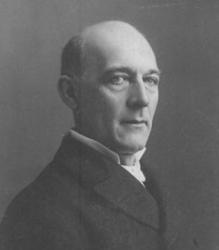
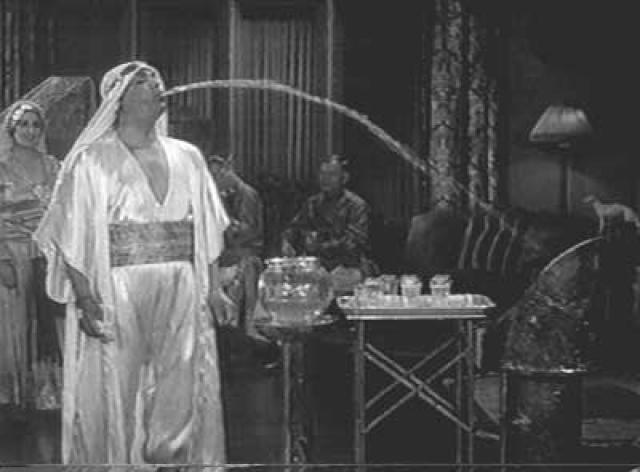
Haji Ali, also known as the "Human Fountain" or the "Regurgitator," was a renowned circus and fairground artist known for his astonishing ability to regurgitate swallowed water, food, and various other substances. Born around 1888-1892 in the Khedivate of Egypt, Haji Ali's exact origins and date of birth remain uncertain. However, some sources claim that as a child, he displayed remarkable abilities, effortlessly consuming large quantities of water and then spouting it out like a fountain. He discovered this talent accidentally at the age of 10 while bathing in the Nile. However, Haji Ali only shared this story much later, in 1926, during a performance at St. Mary's Hospital in Niagara Falls, New York.

From Street Performer to Acclaimed Artist
Haji Ali claimed that after discovering his peculiar gift, he began honing it, hoping to earn some money through performances. One day, when he was 15, Ali was demonstrating his water trick on the street, drinking and spouting water, when the owner of a nearby café emerged. Thinking that the owner intended to harm him, Ali fled, but the café owner caught up with him and, to his surprise, wanted to give him a coin and asked him to repeat the trick. This encounter led to Haji Ali's first job as an entertainer, performing in cafes. In the mid-1920s, after gaining fame in Europe, he relocated to America, where his incredible talents attracted the attention of the curious American audience.
The Human Fountain's Extraordinary Acts
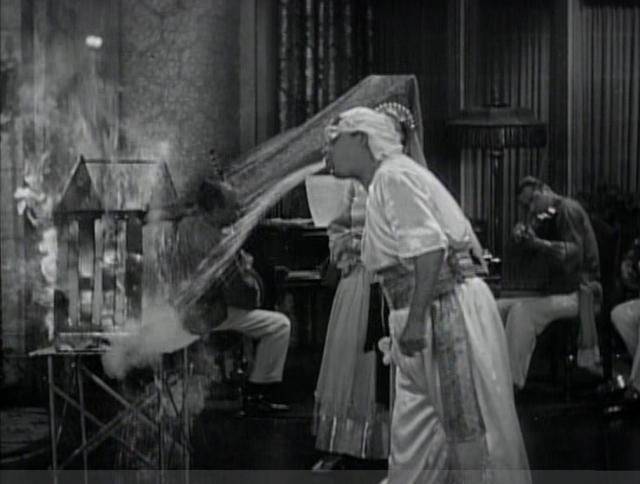
Haji Ali performed at fairs, vaudevilles, and carnivals, perfecting his craft to perfection. Known by several stage names such as "The Egyptian Enigma," "The Human Aquarium," and "The Human Volcano," he drew large crowds to his shows. Haji Ali could swallow and regurgitate anything, from gallons of water to lit cigarettes, from an aquarium with fish to pure kerosene. The fountains he created amazed the audience, and he continued to refine his skills. One of his famous acts involved extinguishing a fire he himself ignited. Ali would drink water first and then "refuel" with a small pitcher of kerosene. Wearing protective goggles, he would have his assistants bring a small wooden house-like structure to the stage, which contained a small fire pit. Ali would spout the kerosene onto the house, resulting in a real fire. He then transformed into a noble firefighter, spewing water from his mouth to extinguish the flames, thrilling the audience who showered him with applause.
Legacy and Influence
Haji Ali's popularity was unparalleled, and at times, he performed more than 20 shows a week. Although he had some competitors, during his active career, no one could match the Egyptian Enigma. His unique art form inspired numerous followers, and even today, artists in the same genre continue to perform, such as the British entertainer Stevie Starr, who swallows and regurgitates unusual objects like light bulbs, and Dickson Oppong, known as "The Hydrant Man" or "The Pump Man." Despite allegations of charlatanism, Haji Ali was never caught in deception. There were rumors that the Rockefeller Institute had expressed interest in examining his stomach, offering a substantial sum of money for the opportunity to study his body after his death. However, his body was eventually offered to Johns Hopkins University, but the university declined the offer.
Passing and Legacy
Haji Ali passed away on November 5, 1937, during a tour in Wolverhampton, England. His extraordinary talent was immortalized in several films, including the 1931 movie "Politiquerias." Although not widely recognized during his lifetime, Haji Ali's name is remembered to this day, as he is considered one of the pioneers of regurgitation as a performing art.