Haled Mashal
 Jordan
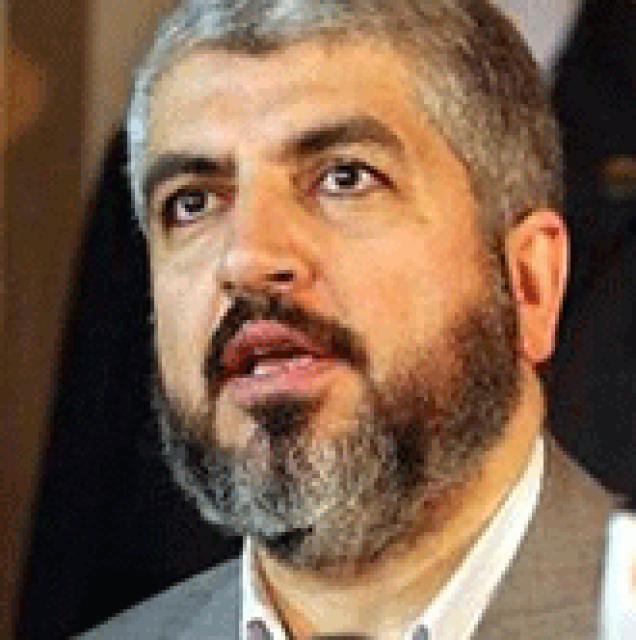
Khaled Mashal is a Palestinian political leader who headed Hamas’s Political Bureau for more than two decades and remains a senior figure in the movement. Born in the West Bank and educated in Kuwait, he built his political career largely in exile, with leadership roles in Jordan, Syria, and Qatar. His life has intersected with the conflict between Israel and Palestinian groups, including a 1997 Israeli assassination attempt that triggered a major diplomatic crisis between Israel and Jordan.
Early life and education
Mashal was born on May 28, 1956, in Silwad, a town near Ramallah in the West Bank. After Israel occupied the West Bank in 1967, his family moved first to Jordan and then to Kuwait, where he grew up and completed his education. He studied physics at Kuwait University and became active in Palestinian student politics. He later taught physics while continuing his political work.
The movement Hamas emerged in 1987 during the First Intifada, drawing on Palestinian branches of the Muslim Brotherhood. Mashal joined its political organization and became one of its influential figures abroad. He was appointed head of the Political Bureau in 1996, placing him at the center of the movement’s external leadership. Hamas is a Palestinian Islamist movement with political and armed components; the United States has designated it a Foreign Terrorist Organization.
Leadership and exile
Mashal’s leadership developed outside the Palestinian territories. He was based in Amman during the 1990s, then relocated after Jordan expelled Hamas leaders in 1999 amid a deteriorating relationship with the group. He later operated from Damascus and moved to Qatar after Hamas closed its Damascus office in 2012 during the Syrian uprising. From abroad, he worked to maintain the organization’s political networks and represent it in regional diplomacy.
Hamas won a majority in the 2006 Palestinian legislative election, a turning point that led to growing tensions with Fatah and a divided Palestinian political system. Under Mashal’s tenure as Political Bureau chief, the organization continued to combine political activity with an armed wing and attacks on Israel. His public statements supported armed resistance, while his role also included negotiations and contacts with regional governments. Israel and Hamas remained bitter adversaries, and Hamas’s tactics and political objectives drew strong condemnation from Israel and other governments.
The 1997 assassination attempt
Mashal became internationally known after Israeli agents attempted to kill him in Amman in September 1997. Agents injected poison as he entered his office, but Jordanian authorities captured two of them. King Hussein threatened a serious rupture in relations with Israel unless Mashal received the antidote. Israel supplied it, and the crisis ended with the release of Hamas spiritual leader Ahmed Yassin from Israeli imprisonment. The episode became a defining moment in Mashal’s public life and a major setback for the Israeli operation.
Later role
Mashal stepped down as head of the Political Bureau in 2017, when Ismail Haniyeh succeeded him, but remained involved in Hamas leadership. After Haniyeh’s killing in 2024, Mashal was again among the senior figures considered for the group’s top position. Hamas later adopted temporary collective leadership, and in 2026 selected Khalil al-Hayya as chairman of the Political Bureau after an internal contest in which Mashal was a candidate.
Mashal’s career reflects the role of an external political leader operating amid displacement, regional rivalries, and prolonged conflict. His influence has rested on decades of leadership within Hamas, while the movement’s use of violence and its political program remain central to the wider conflict and to criticism of its leadership.