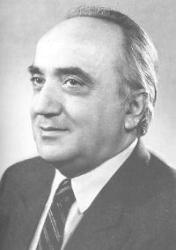
Hamadi Jebali
 Tunisia
- Hamadi Jebali: A Tunisian Engineer, Politician, and Journalist
- Involvement in the Islamist Movement
- Political Persecution and Imprisonment
- Torture and International Condemnation
- Release and Return to Politics
- Prime Minister of Tunisia
Hamadi Jebali: A Tunisian Engineer, Politician, and Journalist
Early Life and EducationHamadi Jebali was born in the Tunisian city of Sousse. He earned his Bachelor's degree in Mechanical Engineering from Tunis University and pursued a Master's degree in Photovoltaics in Paris.

Involvement in the Islamist Movement
Jebali established connections with Tunisian Islamists in 1981. He served as editor of the weekly newspaper "Al-Fajr," affiliated with the Islamist party "Ennahda," while holding a leadership position within the movement.

Political Persecution and Imprisonment
In 1990, "Al-Fajr" published an article by Rashid al-Ghannushi, leading to Jebali's conviction and conditional sentence for "inciting lawlessness." The following year, he was sentenced to imprisonment by a military court for "insulting the judiciary."

In 1992, the government accused Ennahda of planning a coup and charged Jebali with "conspiracy against the state." He was sentenced to 16 years in prison, a conviction later upheld by the Court of Cassation.
Torture and International Condemnation
During his imprisonment, Jebali allegedly suffered torture. His trial was deemed unfair by international organizations such as Human Rights Watch, Human Rights First, and Amnesty International, which designated him a prisoner of conscience.
Release and Return to Politics
Jebali was released in February 2006 after serving over 10 years in solitary confinement. Following the Tunisian Revolution in 2011, Ennahda was legalized, and Jebali emerged as a prominent public figure.
Prime Minister of Tunisia
After Ennahda's electoral victory, Jebali was appointed Prime Minister on December 24, 2011. He held the position until 2013, overseeing the transition to a new democratic government.