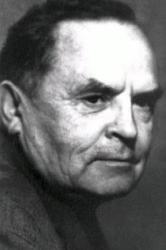
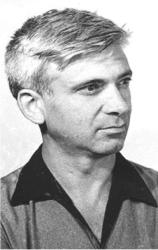
Hans Demelt
 Germany
- Hans Georg Dehmelt: Nobel Prize-Winning Physicist
- World War II and Education
- Post-War Resumption and Migration
- Academic Career and Ionian Trap Developments
- Nobel Prize Recognition
- Notable Achievements
- Awards and Recognition
Hans Georg Dehmelt: Nobel Prize-Winning Physicist
Birth and Early LifeHans Georg Dehmelt, born in Görlitz, Germany, on September 9, 1922, was a German-American physicist who made significant contributions to the field of atomic and subatomic physics.
World War II and Education
After graduating from high school in 1940, Dehmelt was drafted into the German army and fought in World War II, including the Battle of Stalingrad. He later resumed his education, studying physics at the University of Breslau as part of a military program.
Post-War Resumption and Migration
Following his capture by the Americans at the Battle of the Bulge, Dehmelt was liberated in 1946 and continued his studies at the University of Göttingen, where he received his doctorate in 1950. He then accepted a postdoctoral position in the United States.
Academic Career and Ionian Trap Developments
In 1952, Dehmelt joined the University of Washington in Seattle. By 1961, he had risen to the rank of full professor. In 1956, Dehmelt outlined the advantages of ion traps for high-resolution spectroscopy. He subsequently laid the foundation for the construction of such traps.
Nobel Prize Recognition
In 1989, Dehmelt and Wolfgang Paul were jointly awarded half of the Nobel Prize in Physics for "the development of the ion trap technique." Their work had led to significant advances in high-precision measurements of the properties of charged particles.
Notable Achievements
1959:Held a single electron in a Penning trap for 10 seconds.1973:Developed a one-electron generator with David Wineland and Phil Ekstrom.
1987:Performed precise measurements of the gyromagnetic ratio of electrons and positrons.
Awards and Recognition
1985:Rumford Prize, American Academy of Arts and Sciences1989:Nobel Prize in Physics
1995:National Medal of Science, National Science Foundation