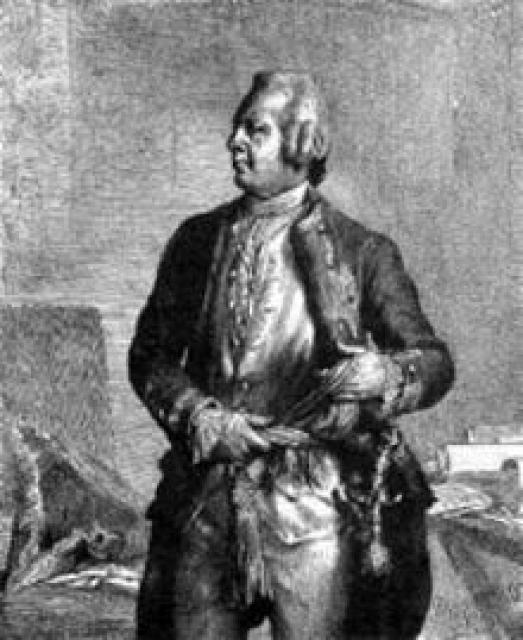
Hans Karl von Winterfeldt
 Germany
Hans Karl von Winterfeldt
Early Career and Royal FavorHans Karl von Winterfeldt, a Prussian general, became a close confidant and friend of Frederick II of Prussia. Winterfeldt initially joined the Prussian military in 1723 and served in the regiment led by his uncle. In 1734, he accompanied Crown Prince Frederick during the Rhine campaign, marking the beginning of their enduring friendship.
Throughout his career, Frederick consistently favored Winterfeldt, entrusting him with significant responsibilities beyond military matters and promoting his rank. He served as a general adjutant to Frederick and held the position of chief of staff (though the term "General Staff" was not yet used).
Military Accomplishments
Winterfeldt commanded the left wing of the Prussian infantry in the Battle of Prague in 1757, demonstrating his skills as a field commander. He also organized the Prussian army's military intelligence and was instrumental in securing the Westminster Convention through diplomatic negotiations in London.
Mortal Wound and Legacy
Winterfeldt met his end at the Battle of Moys in 1757, succumbing to a mortal wound. Frederick was deeply affected by his loss, uttering the poignant words: "There lies Winterfeldt. He was a good and kind man, he was my friend."
Winterfeldt's memory was further immortalized with monuments erected in Berlin and his name being given to a square and street in the German capital. A monument to him was also placed on the Invalidenfriedhof cemetery in Berlin, bearing Frederick's inscription: "He was a good and kind man, he was my friend."
Ambivalent Reactions
While Frederick mourned Winterfeldt, others harbored contrasting sentiments. Winterfeldt's brother, August Wilhelm, believed that he had shortened his life. Henry of Prussia saw his death as divine retribution. Allegedly, Winterfeldt faced animosity from enemies who resented his reputedly scheming and interfering nature.





