
Harriet Tubman
 USA
USA- Biography of Harriet Tubman
- Early Life
- Turning Point
- Family and Escape
- Activism and Civil War
- Later Years and Legacy
Biography of Harriet Tubman
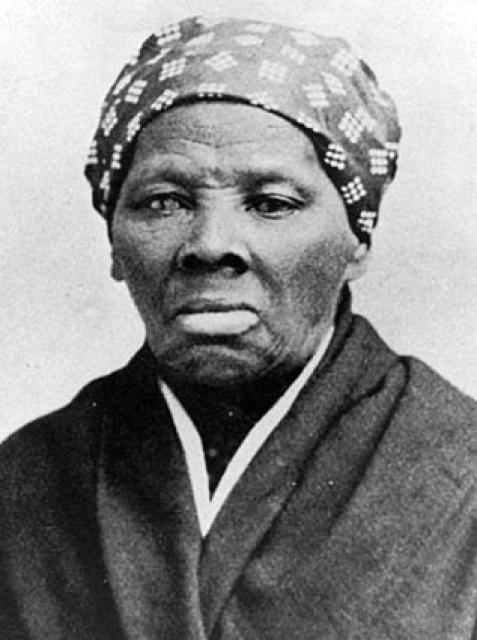
Harriet Tubman was an African-American abolitionist, humanitarian, and spy. She fought not only for the rights of black people but also dedicated herself to fighting for women's rights. Tubman collaborated with several feminist organizations and was personally acquainted with Susan B. Anthony and Emily Howland.

Early Life
Born Araminta in a family of slaves, Harriet Tubman's exact date of birth and specific location are unknown. Her mother had very little time for her children, and Harriet had to become a nanny for her younger siblings at a young age. At the age of 5, she started working as a nanny for a woman named Miss Susan. However, Miss Susan was extremely aggressive towards Harriet, often hitting her with a whip whenever her charge cried, leaving her with scars that remained for the rest of her life. Harriet also worked in the outdoors, checking traps for muskrats in nearby swamps. She was only freed from this work when she became ill with measles but returned to labor after recovering.
Turning Point
When Harriet was 13 years old, a slave ran away in front of her overseer. Harriet refused to help catch the slave and was struck on the head with a heavy object, causing a severe injury. This injury plagued her throughout her life, causing intense pain and occasional visions. It was after this incident that she turned to religion.
Family and Escape
In 1840, Tubman's father gained his freedom, but he continued to work for those who had once owned him. Several years later, Harriet discovered that her mother was also entitled to freedom, and according to the law, any children she had after gaining freedom should also be free. Unfortunately, Harriet was unsuccessful in protecting her parents' rights as it was nearly impossible for a black person at that time.
In 1844, Harriet married a free African-American named John Tubman and changed her name. In 1849, Harriet fell ill, and her owner attempted to sell her but died unexpectedly before completing the sale. This event pushed Harriet to finally escape. Her first attempt failed when her brothers who were also attempting to escape with her forced her to return. However, her second attempt was successful, and she reached Philadelphia. It was there that Harriet began to think about rescuing her family.
Activism and Civil War
Harriet Tubman tried to save money to rescue her family, but new laws regarding runaway slaves made it increasingly difficult. In December 1850, Tubman managed to rescue her niece Kessiah, and later her brother Moses. However, her husband chose not to join her in escaping. Nevertheless, Harriet was able to find other willing individuals seeking freedom.
In April 1858, Harriet Tubman met the well-known abolitionist John Brown, who advocated for violent methods in the fight for freedom. While Tubman did not approve of violence, she shared similar goals with Brown and supported his cause. She assisted Brown in recruiting people for his cause until the final attack on Harpers Ferry in October 1859, in which she did not participate. The raid was unsuccessful, and Brown was arrested and executed.
During the Civil War that began in 1861, Tubman immediately aligned herself with the Union forces. She established connections with General David Hunter and aided the troops in various ways. Tubman helped recruit soldiers, primarily African-Americans, worked as a nurse, and even participated in espionage operations. She never received an official salary and often distributed her rations to friends. Tubman began receiving a pension for her military service in 1899.
Later Years and Legacy
In her later years, Tubman lived in Auburn, New York. Despite never having financial security, she continued to support her relatives and those in need. She worked multiple jobs to make ends meet but never stopped caring for her numerous dependents.
On March 18, 1869, Tubman married Civil War veteran Nelson Davis, and they enjoyed a happy marriage for 20 years. In 1874, they even adopted a girl. After the war, Tubman began receiving some financial support from friends and admirers who recognized her heroic actions. Unfortunately, Tubman found herself in financial trouble in 1873 when she became involved in a dubious cash-handling scheme. The scheme ended badly, with Tubman being beaten and robbed. The incident gained significant attention, and even Gerry W. Hazelton, a member of the House of Representatives from Wisconsin, introduced a bill to grant Tubman $2,000 for her military service. However, the bill ultimately failed.
Harriet Tubman fought not only for the rights of black people but also dedicated herself to fighting for women's rights. She collaborated with various feminist organizations and personally knew Susan B. Anthony and Emily Howland. Tubman used her personal experiences and stories of her heroic actions during the Civil War to advocate for gender equality. Despite her widespread recognition and coverage in the press, Tubman never gained financial stability.
Harriet Tubman passed away on March 10, 1913, at the age of over 90, due to pneumonia. In her final years, Tubman suffered from declining health. Her legacy as an abolitionist, humanitarian, and women's rights advocate continues to inspire and shape the fight for equality.


