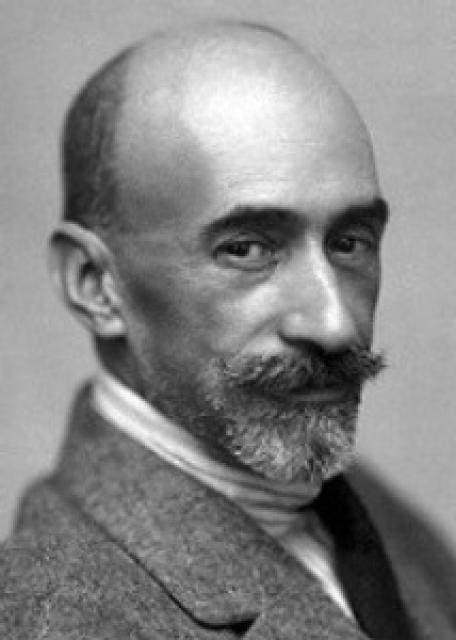
Hasinto Benavente-i-Martines
 Spain
Spain- Childhood and Early Life
- Education and Early Career
- Literary Beginnings
- Rise to Prominence
- The Masterpiece: "Los intereses creados"
- Later Years and Legacy
- Political Views and Controversy
- Death and Impact
Childhood and Early Life
Jacinto Benavente y Martínez was born in Madrid, Spain, as the youngest of three children. His father, a prominent pediatrician, provided a comfortable upbringing for his family. Benavente developed a love for theater at an early age, putting on plays for his loved ones.
Education and Early Career
In 1882, Benavente enrolled in the University of Madrid's law faculty. However, he proved to be a poor student and left university after his father's passing in 1885. He then devoted himself to literature, indulging in a period of social revelry before becoming an actor.
Literary Beginnings
Benavente's first published work, "Teatro Fantastico" (1892), comprised short dramatic dialogues. He followed this with a collection of poems ("Versos") and a prose anthology titled "Cartas de mujeres," exploring female psychology. His early plays, such as "El nido ajeno" (1894) and "Gente conocida" (1896), established him as a rising star in Spanish literature.
Rise to Prominence
As part of the "Generation of '98," Benavente sought to restore Spain's cultural prestige after the Spanish-American War. He became the editor of the literary journal "Vida Literaria," which voiced the movement's ideals. Benavente's plays rejected romanticism, embracing satire and irony instead. They emphasized wit, social commentary, and psychological depth, as seen in "La gobernadora" (1901), "La noche del Sabado" (1903), and "La Princesa Bebe" (1906).
The Masterpiece: "Los intereses creados"
In 1907, Benavente wrote his most celebrated play, "Los intereses creados." This witty comedy, set in the Italian Commedia dell'Arte tradition, features the cunning servant Crispín who manipulates the actions of self-serving aristocrats. Benavente himself frequently played the role of Crispín, showcasing his theatrical prowess.
Later Years and Legacy
Receiving the Nobel Prize in Literature in 1922 solidified Benavente's status as a literary giant. The Swedish Academy lauded his "masterful art with which he has continued the glorious traditions of the Spanish drama." Despite a period of inactivity during the 1910s, his subsequent plays, such as "La malquerida" (1913) and "Lecciones de buen amor" (1924), enjoyed critical and commercial success.
Political Views and Controversy
During the Spanish Civil War, Benavente initially supported the Republicans but eventually accepted the Franco regime, a decision that alienated some of his liberal supporters. His later plays, composed in his twilight years, were generally considered inferior to his earlier works.
Death and Impact
Benavente passed away in Madrid in 1954 from a heart attack. During his lifetime, his plays were immensely popular internationally, cementing his reputation as a renowned dramatist.
Contemporary critics have offered varying assessments of Benavente's legacy. While some have criticized his plays for lacking philosophical depth, others have praised their wit, originality, and the enduring quality of his characters. Jacinto Benavente remains a significant figure in Spanish literature, his plays continuing to be performed and studied around the world.