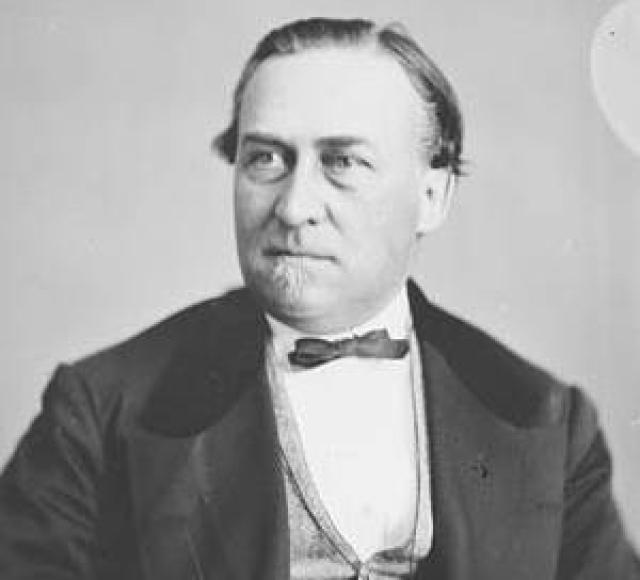
Hector-Louis Langevin
 Canada
- Hector-Louis Langevin: A Canadian Statesman
- Education and Political Beginnings
- Mayor of Quebec City
- Fathers of Confederation
- Minister of Public Works
- Later Career and Challenges
- Retirement and Legacy
Hector-Louis Langevin: A Canadian Statesman
Early Life and FamilyHector-Louis Langevin was born on August 25, 1820, in Quebec City, the son of Jean Langevin and Sophie Lafrance. His family had a long history in Quebec, tracing their ancestry to a French soldier who arrived in the 1660s. Langevin's father was a farmer, but later opened a store in Quebec City.
Education and Political Beginnings
In 1847, Langevin moved to Montreal, where he studied law under George-Étienne Cartier. He also became the editor of the Montreal Diocese's conservative weekly newspaper. Langevin was passionate about politics and advocated for the unification of British North American colonies, opposing radicalism and anti-clericalism.
Mayor of Quebec City
In 1856, Langevin was elected to Quebec City's municipal council and became mayor in 1858, a position he held until 1861. As mayor, he reorganized the city's finances and played a key role in resolving a conflict related to the construction of the North Shore Railway.
Fathers of Confederation
In 1858, Langevin entered provincial politics and became a member of the Legislative Assembly of the Province of Canada. He was initially a Liberal-Conservative but later joined the Conservatives, believing the Liberals of the time to be too radical. He participated in all three conferences leading to the creation of the Canadian Confederation in 1867.
Minister of Public Works
In 1869, Prime Minister John A. Macdonald appointed Langevin as Minister of Public Works, a position he held for nearly 20 years. As minister, Langevin oversaw the construction and maintenance of public buildings, railroads, ports, and telegraphs.
Later Career and Challenges
Langevin's centralized approach to government clashed with growing nationalism in Quebec. He faced challenges related to the Métis movement in Manitoba and the controversial execution of Louis Riel. He also confronted issues of church-state relations.
Retirement and Legacy
In 1891, following Macdonald's death, Langevin resigned as minister after Prime Minister John Abbott failed to fulfill his promise to appoint him Lieutenant-Governor of Quebec. Hector-Louis Langevin passed away on June 11, 1906, leaving behind a legacy as one of the "Fathers of Canadian Confederation."


