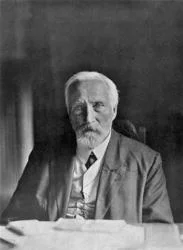
Heinrich Boie
Heinrich Boie was a German zoologist whose work at Leiden’s natural history museum helped advance the study of reptiles and amphibians. He later joined a Dutch scientific expedition to Java, where he continued collecting and studying wildlife until his early death.
Early life and scientific training
Boie was born on May 4, 1794, in Meldorf, in the duchy of Holstein, then part of the Danish monarchy. His father was the writer and official Heinrich Christian Boie. He initially studied law, but lectures in natural history by Johann Friedrich Blumenbach in Göttingen and Friedrich Tiedemann in Heidelberg drew him toward zoology.
In 1817, he became curator of the zoological collection at the University of Heidelberg. His knowledge of birds and other vertebrates attracted the attention of Coenraad Jacob Temminck, director of the newly established National Museum of Natural History in Leiden.
Leiden and herpetology
Boie moved to Leiden in 1821 to serve as curator of the museum’s vertebrate collection. He helped organize and catalog its holdings, with particular attention to reptiles and amphibians. He published scientific articles on these groups and began preparing a major study of the herpetology of Java, based in part on collections made by earlier naturalists.
The intended work, Herpétologie de Java, was nearly ready for publication when political upheaval interrupted the printing in Brussels. The manuscript and plates were never published in the form he had planned, leaving a substantial part of Boie’s research known mainly through his surviving notes and its influence on later zoologists.
Expedition to Java and death
In 1825, Boie was appointed to the Natural History Commission for the Dutch East Indies. The commission was organized to conduct research and gather specimens for the Leiden museum. He traveled to Java with fellow naturalists, including Heinrich Christian Macklot and Salomon Müller, and undertook fieldwork in the island’s tropical environment.
Boie died in 1827 in Buitenzorg, now Bogor, at about 33 years old. His expedition ended before he could complete or publish much of the work he had prepared. Later scholars have revisited his notes and manuscript materials to understand his contribution to the early scientific study of Java’s wildlife.
Legacy
Boie’s career linked museum cataloging and field research at a time when European natural history depended heavily on specimens gathered across colonial territories. His efforts to classify and describe reptiles and amphibians, especially those from Java, contributed to the foundation of herpetology in the region, even though his principal manuscript never appeared in print.