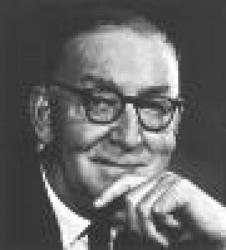
Heinrich Hertz
 Germany
- Heinrich Rudolf Hertz: A Pioneer in Electromagnetism
- Early Research and Recognition
- Experimental Verification of Maxwell's Theory
- Impact and Legacy
Heinrich Rudolf Hertz: A Pioneer in Electromagnetism
Early Life and EducationBorn on February 22, 1857, in Hamburg, Germany, Heinrich Rudolf Hertz was the son of a successful lawyer. From a young age, Hertz exhibited a remarkable aptitude for learning and a wide range of interests, including poetry and mechanics. Despite his enthusiasm for academics, his frail health plagued him throughout his life.
In 1875, Hertz pursued his higher education at the Dresden Polytechnic and later at the Munich Polytechnic. Initially intending to specialize in engineering, he soon shifted his focus to physics and enrolled in the prestigious University of Berlin. There, he encountered the mentorship of Hermann von Helmholtz, a renowned physicist who significantly influenced Hertz's trajectory.
Early Research and Recognition
Helmholtz recognized Hertz's exceptional talents and directed him towards an investigation into the kinetic energy of an electric current. Hertz's dedication and ingenuity resulted in the successful completion of the project in a mere three months, earning him high praise from Helmholtz.
Hertz's work on electric induction earned him a doctoral degree with distinction in 1880, a rare achievement for a student. He subsequently held a professorship in theoretical physics at the University of Kiel from 1883 to 1885, where he delved into the study of electromagnetism.
Experimental Verification of Maxwell's Theory
In 1885, Hertz accepted a position at the Karlsruhe Polytechnic, where he undertook his groundbreaking experiments on the propagation of electromagnetic waves. Drawing inspiration from Faraday and Maxwell's theoretical work, Hertz hypothesized that oscillating electrical currents could generate electromagnetic waves that could be detected and studied.
Through meticulous experimentation, Hertz created a high-frequency electrical generator and receiver and discovered that the electromagnetic waves traveled at a finite speed, exhibited reflection and refraction properties, and possessed polarization similar to light waves. These findings, published in his seminal paper "On the Rays of Electric Force" in 1888, revolutionized physics by providing experimental confirmation of Maxwell's electromagnetic theory.
Impact and Legacy
Hertz's work paved the way for numerous practical applications, including wireless communication and broadcasting. It also provided a crucial foundation for Albert Einstein's theory of relativity. Hertz's experiments and discoveries laid the groundwork for the modern era of electromagnetism and wireless technology, leaving an enduring legacy in the field of physics.
In recognition of his contributions, the unit of frequency in the International System of Units (SI) is named the "hertz," honoring the pioneering physicist whose experiments illuminated the nature of electromagnetic waves.