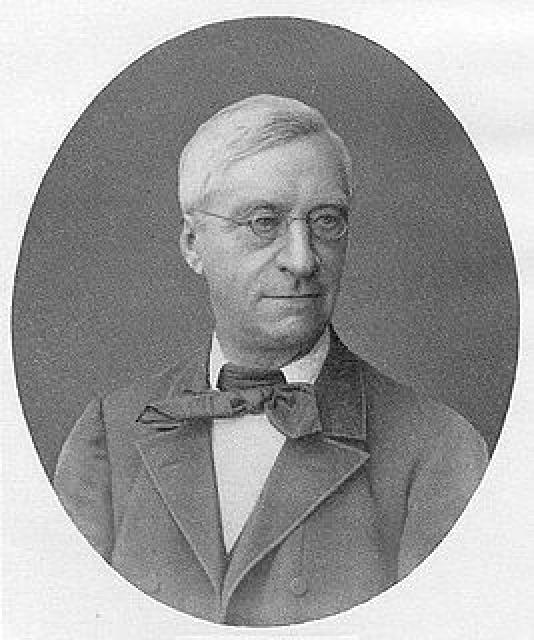
Heinrich Keil
 Germany
- Biography of Heinrich Keil
- Professor at Erlangen and Halle
- Editor of "Grammatici latini"
- Critical editions of ancient authors
- Legacy
Biography of Heinrich Keil
Heinrich Keil was a German philologist who made significant contributions to the field. He was born in Germany, but little is known about his early life and education.
Professor at Erlangen and Halle
Keil began his academic career as a professor at the University of Erlangen. He taught German philology and became known for his expertise in the field. His research and teaching abilities earned him recognition and respect among his colleagues and students.
Later in his career, Keil moved to the University of Halle, where he continued his work as a professor of German philology. He was highly regarded for his knowledge and passion for the subject, and his lectures attracted many students.
Editor of "Grammatici latini"
One of Keil's most notable accomplishments was his role as the editor of the renowned semitomous anthology "Grammatici latini." This seven-volume collection of late Latin grammarians' works was published in Leipzig from 1855 to 1880. Keil meticulously curated and edited these texts, ensuring their accuracy and accessibility to scholars and researchers.
Critical editions of ancient authors
In addition to his work on "Grammatici latini," Keil also published critical editions of several ancient authors' works. He edited "Plinii Secundi Epistolae" (Letters of Pliny the Younger), "Catonis de agricultura liber" (Cato's Treatise on Agriculture), and "Varronis rerum rusticarum libri III" (Varro's Three Books on Agriculture). These editions, published in Leipzig between 1882 and 1891, provided scholars with reliable and accurate texts of these important ancient works.
Legacy
Heinrich Keil's contributions to German philology and the study of ancient texts are highly regarded in the academic community. His meticulous editing and critical editions have been invaluable to scholars and researchers, allowing for a deeper understanding of Latin grammar and ancient literature. Keil's dedication and passion for his field continue to inspire future generations of philologists.