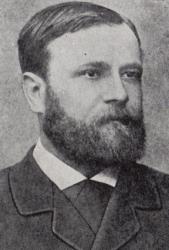
Mark Gabinsky
 Ukraine
- Early Life and Education
- Career at the Institute of Linguistics
- Academic Achievements
- Contributions to Linguistics
- Activism and Publications
- Legacy
Early Life and Education
Mark Gabinsky was born in 1932 to an educated Jewish family in Odessa. Displaying an early aptitude for languages, he independently mastered Spanish, Italian, and Portuguese. In 1953, he graduated from Leningrad State University with a degree in Romance Philology.
Career at the Institute of Linguistics
Gabinsky joined the Institute of History, Language, and Literature of the Moldavian Branch of the USSR Academy of Sciences in 1953. During this period, he became proficient in Moldovan (Romanian) and participated in the compilation of the Russian-Moldovan Dictionary published in 1961.
Academic Achievements
In 1967, Gabinsky earned his PhD with a dissertation on the emergence of the infinitive in Albanian. He published a monograph on the same topic later that year. His doctoral dissertation, completed in 1972, explored the appearance and loss of the primary Albanian infinitive. This work was also published as a monograph.
Contributions to Linguistics
Gabinsky authored over 250 scientific publications spanning Balkan and Romance languages as well as general linguistics. He was the first Soviet linguist to publish an article on Sephardic (Judeo-Spanish) in 1967. In 1992, he released a monograph on Sephardic, marking the first Russian-language study dedicated to Judezmo.
Activism and Publications
In 1988, Gabinsky became an advocate for the transition of Moldovan to the Latin script. To commemorate his 75th birthday in 2007, his monumental "Dictionary of Root Etymological Doublets of the Romanian Language" was published in Chișinău.
Legacy
Gabinsky served on the editorial boards of several Romanian-language linguistics journals. His extensive knowledge of over ten languages, including Albanian, Sephardic, Hebrew, Modern Greek, Macedonian, and Aromanian, distinguished him as a remarkable linguist and scholar.