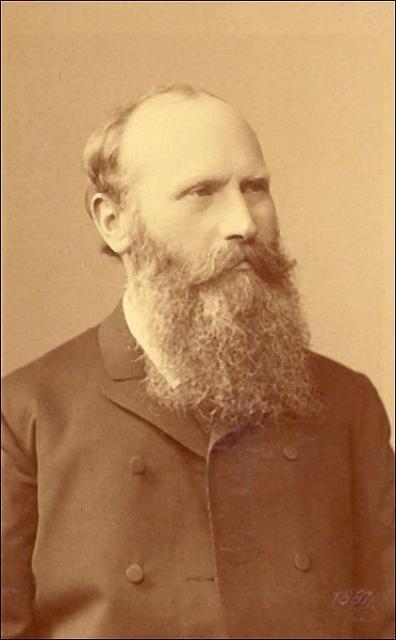
Heinrich Waldeyer
 Germany
Biography of Heinrich Waldeyer
Heinrich Waldeyer was a German anatomist and histologist. He was born on October 6, 1836, in Hehlen, Germany. After completing his education at Theodorianum Gymnasium in Paderborn, he pursued studies in mathematics and natural sciences at the University of Göttingen. However, influenced by Jacob Henle, he switched his focus to medicine.
Waldeyer graduated from the University of Greifswald and then moved to Berlin. In 1861, he obtained his doctoral degree for his work on the clavicle. Afterward, he joined the University of Königsberg in 1862 and moved to the University of Wrocław two years later. It was during this time that he specialized in the diagnosis of tumors and became renowned for his expertise in this field. One of his most famous patients was Emperor Friedrich III, whom he diagnosed with throat cancer.
In 1872, Waldeyer became a professor of anatomy at the University of Strasbourg. He returned to Berlin in 1883, where he primarily focused on anatomical education. From 1898 to 1899, he served as the rector of the Friedrich Wilhelm University in Berlin.
Throughout his career, Waldeyer held various positions in the Berlin Society of Anthropology, Ethnology, and Prehistoric History. He served as its deputy chairman from 1893 to 1894, 1897 to 1899, 1901 to 1902, and 1905 to 1910. He also served as its chairman in 1892, 1896, 1900, and from 1903 to 1904. In 1909, he became an honorary member of the society.
Waldeyer made significant contributions to the field of neurology and cytology. In 1881, he introduced the concept of the neuron as the functional unit of the nervous system. He also coined the term "chromosome" in 1888 to describe the structure of the cell nucleus.
Heinrich Waldeyer was recognized for his achievements and became a foreign corresponding member of the St. Petersburg Academy of Sciences. He passed away on January 23, 1921, in Berlin, leaving behind a long and diverse list of scientific works.