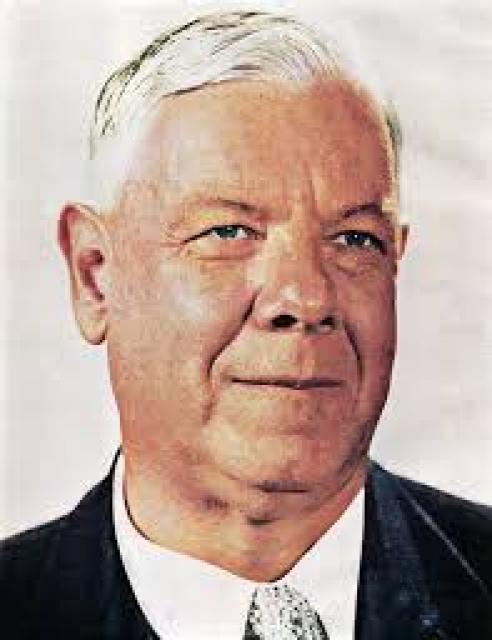
Hendrik Verwoerd
 Netherlands
- Biography of Hendrik Verwoerd
- Early Career and Political Involvement
- Rise to Power
- Assassination Attempt and Continuing Political Agenda
- Assassination and Legacy
Biography of Hendrik Verwoerd
Hendrik Verwoerd was born on September 8, 1901, in Amsterdam, Netherlands. He obtained his doctoral degree in psychology from Stellenbosch University and studied at the universities of Hamburg, Leipzig, and Berlin. Upon his return to Stellenbosch in 1927, he became a professor of applied psychology and later a professor of sociology.
Early Career and Political Involvement
Verwoerd played a significant role in organizing the national conference on poverty among white people, which took place in Kimberley in 1934. In 1937, he became the editor of "Die Transvaler," the newspaper of the National Party, published in Johannesburg in Afrikaans. During World War II, Verwoerd sympathized with Nazi Germany, and he lost a defamation lawsuit against the Johannesburg-based newspaper "Star" for accusing him of being spiritually closer to Berchtesgaden than South Africa.
Rise to Power
In 1948, when the National Party came to power on the apartheid platform, Verwoerd ran for the lower house of parliament. However, later that same year, he was elected to the Senate. In 1950, he was appointed Minister of Bantu Affairs in Daniel Malan's cabinet and succeeded in passing laws that gave the government almost complete control over race relations. He retained his ministerial position in Johannes Strijdom's government and eventually became the Prime Minister in 1958.
Assassination Attempt and Continuing Political Agenda
In early 1960, after the violent suppression of African protests against the compulsory carrying of identity documents, Verwoerd was attacked and shot twice in the head at close range by David Pratt, a white farmer who was found to be mentally ill. After recovering from the assassination attempt, Verwoerd resumed his efforts to implement his program. In October 1960, he received the support of the majority of the white electorate in a referendum that decided whether South Africa should become a republic or remain under the British Crown. In March 1961, the government announced that due to criticism of its racial policies by members of the Commonwealth, South Africa would withdraw from the Commonwealth after proclaiming itself a republic on May 31, 1961. In the subsequent elections in 1961 and 1966, the National Party continued to gain a stronger majority in parliament.
Assassination and Legacy
Verwoerd was assassinated on September 6, 1966, by Dimitri Tsafendas, a South African of mixed heritage who worked as a parliamentary messenger. Despite his controversial policies and the apartheid system he implemented, Verwoerd had a lasting impact on South African history and politics. He is remembered as one of the key figures in the development and enforcement of apartheid policies in the country.