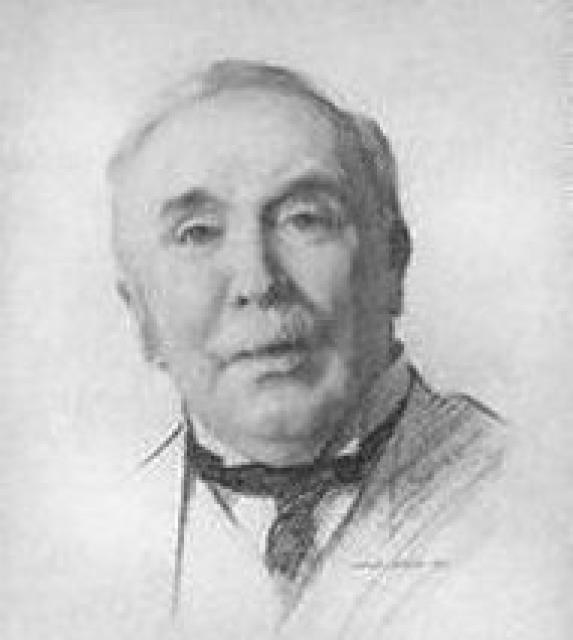
Henry Campbell-Bannerman
 Great Britain
- Early life and entry into politics
- Minister and Liberal leader
- Prime minister and reform government
- Resignation and death
- Legacy
Sir Henry Campbell-Bannerman (September 7, 1836 – April 22, 1908) was a Scottish Liberal politician who served as prime minister of the United Kingdom from 1905 to 1908. A long-serving member of Parliament and cabinet minister, he led the Liberals to a landslide election victory in 1906. His government passed important labor and social reforms, while his outspoken opposition to British conduct during the Boer War helped define his public reputation.
Early life and entry into politics
Born Henry Campbell in Kelvinside, Glasgow, he was the youngest of six children in a family that owned a successful drapery business. He attended the High School of Glasgow, the University of Glasgow and Trinity College, Cambridge, where he studied classics. After university he joined the family firm.
In 1868, Campbell was elected Liberal member of Parliament for Stirling Burghs, a constituency he represented for the rest of his life. In 1871 he married Sarah Charlotte Bruce; in 1877 Campbell inherited property from his maternal uncle and added Bannerman to his surname. The couple had no children.
Minister and Liberal leader
Campbell-Bannerman held several junior government posts before becoming chief secretary for Ireland in 1884. He served as secretary of state for war in William Gladstone’s governments and continued in the post under Lord Rosebery. He pursued army reforms and became known for negotiating the retirement of the Duke of Cambridge as commander-in-chief, clearing the way for a more professional military structure.
The Second Boer War divided the Liberal Party. Campbell-Bannerman opposed the harsh policies used by Britain in South Africa, including the camps where Boer civilians were confined. In 1901 he described the British methods as “methods of barbarism,” a phrase that made him a prominent critic of the war. Chosen as Liberal leader in the House of Commons in 1899, he worked to hold together factions that disagreed over imperial policy.
Prime minister and reform government
After Conservative prime minister Arthur Balfour resigned in December 1905, King Edward VII asked Campbell-Bannerman to form a government. His Liberals won a sweeping victory in the January 1906 general election. The government strengthened legal protections for trade unions through the Trade Disputes Act of 1906, which limited unions’ liability for damages arising from industrial action. It also advanced measures concerning school meals, workplace safety and compensation for workers injured on the job.
His administration granted self-government to the Transvaal and the Orange River Colony, former Boer republics that had come under British control after the war. Campbell-Bannerman supported greater self-government for Ireland and backed expanded social provision, although some of the major Liberal welfare reforms associated with the period were enacted after he left office under his successor, H. H. Asquith.
Campbell-Bannerman was the first British prime minister to receive that title in an official royal warrant, issued in 1905. Before then, “prime minister” was commonly used but not formally recognized in this way.
Resignation and death
By 1907, Campbell-Bannerman’s health was failing. He suffered heart attacks and, in April 1908, resigned as prime minister. Asquith succeeded him. Campbell-Bannerman died at 10 Downing Street on April 22, 1908, only weeks after leaving office. His wife had died the previous year.
Legacy
Campbell-Bannerman is remembered as a conciliatory party leader who helped unite a broad Liberal coalition and gave the party a decisive electoral mandate. His denunciation of the Boer War’s treatment of civilians gave moral force to antiwar criticism, while his government’s legislation strengthened trade-union rights and began a period of major social reform. He did not live to see the full program carried forward by Asquith’s government, but his leadership helped establish its political foundations.