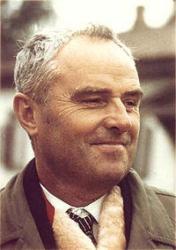
Henry Gantt
 USA
USA- Biography of Henry Gantt
- Early Life and Education
- Career in Management
- Gantt Charts
- Contributions in Work Planning
- Legacy and Contributions to Management
Biography of Henry Gantt
Henry Gantt was an American engineer, mechanic, and management specialist, best known as the creator of Gantt charts. His proposed approach was used in a number of important engineering projects of the modern era, such as the Hoover Dam and the Interstate highway system, and remains relevant to this day.
Early Life and Education
Gantt was born in Calvert County, Maryland. After graduating from high school in 1878, he attended Stevens Institute of Technology in New Jersey. Initially, Gantt worked as a teacher and draftsman to support himself, but fate led him to mechanical engineering.
Career in Management
In 1887, Gantt, along with Frederick W. Taylor, applied scientific management principles to large organizations such as Midvale Steel and Bethlehem Steel. After working in this field until 1893, Gantt decided to pursue a career in consulting. It was during this time that he invented the famous Gantt charts and developed a unique system of wage payment and work efficiency evaluation. He also introduced the concept of social responsibility in business, which was quite unconventional for its time.
Gantt Charts
The term "Gantt charts" refers to a variety of different diagrams. Gantt was the first to use graphical representation to report progress to management, allowing them to quickly understand the relationship between completed work and planned goals. Gantt charts proved to be incredibly useful and are now included in almost all project management systems.
Contributions in Work Planning
In his 1916 book, "Work, Wages, and Profits," Gantt further developed the idea of work planning, particularly in the organization of assigning new tasks. His approach involved creating a list of necessary tasks arranged by priority. Gantt emphasized that even the most elegant schedule would be useless if not followed.
In his 1919 book, "Organizing for Work," Gantt expanded on the same topic. He highlighted two main principles for creating diagrams: using the necessary time as the unit of work measurement and utilizing the space on the chart to display tasks required for completion. Gantt charts were used to demonstrate the current status of work after initial planning, with separate sections for tasks completed within a month or year. The charts also indicated the arrival of necessary components from contractors, with a neat breakdown by month.
Legacy and Contributions to Management
Gantt charts are still widely used today, although their creation is mostly delegated to specialized information systems. Another important idea of Gantt was the significance of the human factor. He emphasized the importance of not only providing adequate compensation for workers but also allowing them to derive satisfaction from their work. Gantt is often credited as one of the pioneers of more humane principles of production and management, with unconventional ideas on task setting and employee motivation.