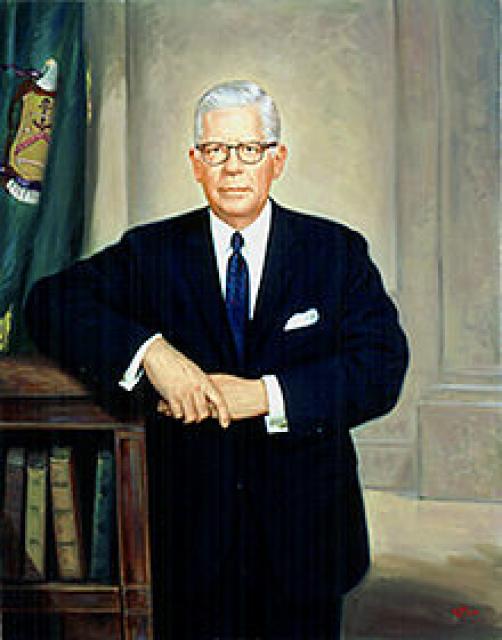
Henry Hammill Fowler
 USA
USA- Biography of Henry Hamill Fowler
- Early Life and Education
- Legal Career and Government Service
- Deputy Secretary of the Treasury
- Minister of Finance
- Later Life and Legacy
Biography of Henry Hamill Fowler
Henry Hamill Fowler was an American lawyer and politician. He served as the Deputy Secretary of the Treasury from February 3, 1961, to April 10, 1964. During his time at the Treasury, he worked extensively on the adoption of an administrative tax program that included $11.5 billion in taxes. Afterward, he returned to private legal practice, becoming a senior member of the Washington firm 'Fowler, Leva, Hawes and Symington'.
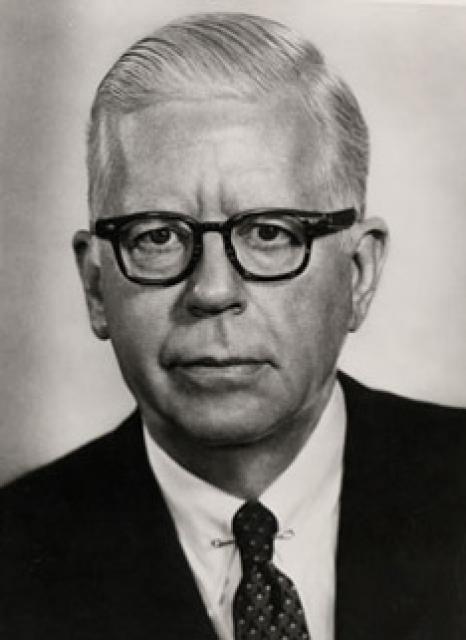
Early Life and Education
Henry Hamill Fowler was born on September 5, 1908, in Roanoke, Virginia. He was the son of Mack Johnson Fowler, a machinist, and his wife Bertha Browning. Fowler graduated from Roanoke College in 1929, where he was involved in various sports and edited the college newspaper. He obtained his law degree from Yale Law School in 1932.
Legal Career and Government Service
Fowler initially worked at the law firm 'Covington & Burling' in Washington, D.C. He then represented the legal staff of the Tennessee Valley Authority (TVA) in 1934. He rose to the position of Assistant General Counsel of TVA in 1939 and subsequently served as the chief attorney for the Subcommittee of the U.S. Senate Committee on Education and Labor.
From 1941 to 1944, Fowler worked as an assistant to the General Counsel of the War Production Board, and then served in the United Kingdom and Germany from 1944 to 1945. He returned to private practice until 1951 when he joined the government to work on troop mobilization during the Korean War. During this time, he served as the administrator of the government agency NPA, managed the affairs of the Defense Production Administration (DPA), headed the Office for Defense Mobilization (ODM), and served as a member of the National Security Council (NSC).
Under President Eisenhower, Fowler returned to private legal practice and worked in the Democratic Advisory Council (DAC), which helped shape the party's position on various issues. He served on the Money and Credit Commission (CMC) from 1958 to 1961 and was a member of the National Committee on Government Finance at the Brookings Institution from 1960 to 1961.
Deputy Secretary of the Treasury
Fowler served as the Deputy Secretary of the Treasury from February 3, 1961, to April 10, 1964. He played a significant role in the Treasury, working on the adoption of an administrative tax program that included $11.5 billion in taxes. After his tenure, he once again returned to private legal practice, becoming a senior member of the Washington firm 'Fowler, Leva, Hawes and Symington'.
Minister of Finance
As the Minister of Finance from 1965 to 1968, Fowler was known for his loyalty to Lyndon Johnson, regardless of the administration's performance. He was described as a man with a "rosy face, Southern charm, and conservative outlook." His major challenges included inflation and the balance of payments deficit. In August 1967, he initiated a campaign for a 10% tax on excessive prices, which was eventually adopted in June 1968. Regarding the balance of payments deficit, Fowler advocated for a gradual resolution. He organized the two-tier gold market system in 1968 and played a role in the international agreements of 1967-1968 that led to the creation of a new international currency reserve system.
Later Life and Legacy
After leaving the Treasury, Fowler joined the New York investment banking firm 'Goldman Sachs' as a partner. He was married to Trudye Pamela Hathcote on October 19, 1938, and they had a son, Henry, and two daughters, Marianne and Susan. Fowler passed away from pneumonia on January 3, 2000, while residing in Falls Church, Virginia.