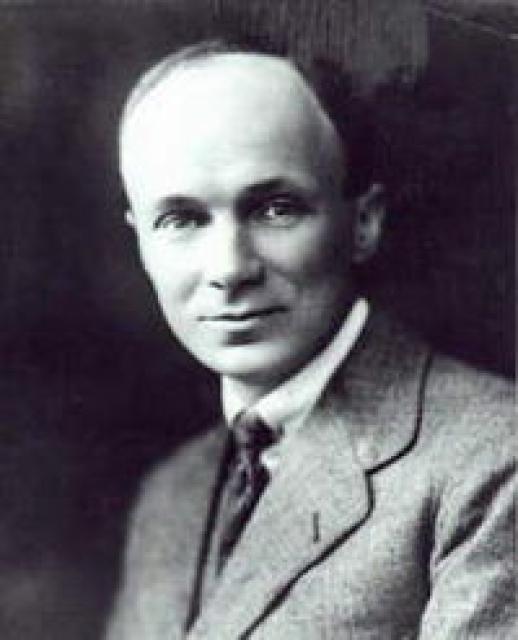
Henry Joseph Round
 Great Britain
- Biography of Henry Joseph Round
- Early Life
- Work with Marconi
- Discovery of Electroluminescence
- Role in World War I
- Later Career and Contributions
- Contribution to World War II
- Legacy and Death
Biography of Henry Joseph Round
Henry Joseph Round was an engineer and inventor, and one of the early pioneers in the field of radio technology worldwide. He worked as a personal assistant to Guglielmo Marconi and became one of the first scientists to observe electroluminescence in diodes. He held 117 patents throughout his career.
Early Life
Henry Joseph Round was born to Joseph and Gertrude Round in Kingswinford, Staffordshire. He spent his childhood in Kingswinford and attended the local grammar school before enrolling in the Royal College of Science.
Work with Marconi
In 1902, Round joined the Marconi company, and shortly after, Marconi achieved his first successful wireless transatlantic transmission. Round was sent to the United States, where he conducted various experiments in radio technology. He focused on new technologies like tunable inductive coils and experimented with different methods of message transmission across various landscapes and at different times of the day.
Discovery of Electroluminescence
While experimenting with crystal detectors, Round discovered a peculiar glow when passing current through certain materials. At the time, he could not anticipate the significance of his observations, as the term "light-emitting diode" (LED) had yet to be coined. Later, it became clear that Round had made a significant discovery. In 1907, he published his findings in the journal "Electrical World," describing a range of materials that emitted light under the influence of current and highlighting the differences in the luminescence of different materials.
Role in World War I
In 1914, the First World War began, and Round was called into military service as a captain in the intelligence corps. Due to his experience in radio direction finding, he built a network of stations along the Western Front. These stations quickly proved valuable, and Round was subsequently commissioned to build another network for England. It was the stations built by Round that played a crucial role in the Battle of Jutland. In May 1916, Round's stations detected the German fleet in Wilhelmshaven harbor. By analyzing the signals, British analysts predicted the fleet's movements, enabling the British Navy to intercept the German ships.
Later Career and Contributions
After the war, Round was awarded the Military Cross for his service. He left the military and returned to his experiments in radio technology. Round played a significant role in organizing the first broadcasting sessions in Britain and held positions as a lead engineer in the Marconi company and later founded his own consulting group.
Contribution to World War II
With the outbreak of the Second World War in 1939, Round's expertise was once again needed. He was included in the committee responsible for the development of the first sonars as part of the Anti-Submarine Detection Investigation Committee.
Legacy and Death
Henry Joseph Round passed away in August 1966 after a brief illness in a nursing home.