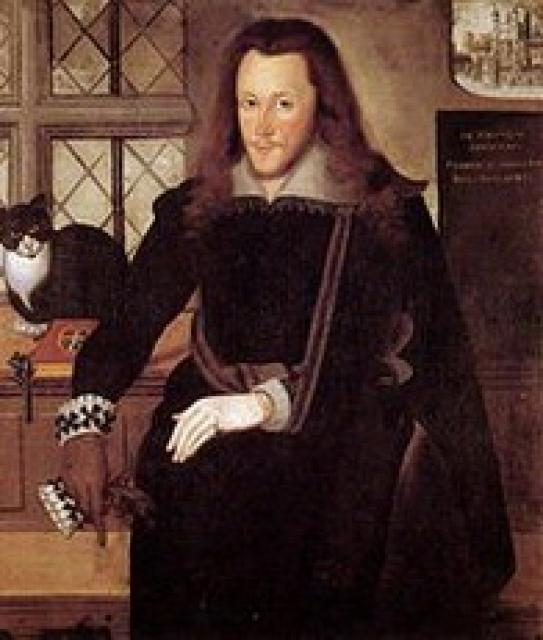
Henry Wriothesley
 Great Britain
- The Early Years of Henry Wriothesley, Earl of Southampton
- Education and Religious Upbringing
- Patronage of Arts and Literature
- Military and Political Ambitions
- Marriage and Queen Elizabeth's Wrath
- Essex's Rebellion and Imprisonment
- Alleged Relationship with Shakespeare
- Later Life and Legacy
The Early Years of Henry Wriothesley, Earl of Southampton
Henry Wriothesley, the 3rd Earl of Southampton, was born in Cowdray House, Sussex, in 1573. His father, Henry Wriothesley, 2nd Earl of Southampton, passed away when Henry was only eight years old. His mother, Mary Brown, was related to the Montague family, known for their Catholic leanings.
Education and Religious Upbringing
Despite his family's Catholic background, Southampton was placed under the guardianship of William Cecil, Lord Burghley. Cecil, a staunch Protestant, ensured that Southampton received a Protestant education at St. John's College, Cambridge. However, Southampton never succumbed to religious fanaticism, reflecting the moderate stance he maintained throughout his life.
Patronage of Arts and Literature
Southampton's interest in the arts and literature was evident from an early age. At the age of 18, he became a patron of several poets and writers, including William Shakespeare. Shakespeare dedicated both "Venus and Adonis" (1593) and "The Rape of Lucrece" (1594) to Southampton, cementing their close association.
Military and Political Ambitions
In 1596, Southampton's request to join an expedition to Cadiz was denied. However, in 1597, with the support of Secretary of State Sir Robert Cecil, he participated in the Azores expedition. In 1598, he gained permission to travel to Europe and visited Paris.
Marriage and Queen Elizabeth's Wrath
Southampton's love affair with Elizabeth Vernon, a cousin of the Earl of Essex, led to an unauthorized marriage. Queen Elizabeth I was furious and demanded Southampton's return to London. He attempted to resist but was imprisoned in the Fleet Prison. His wife was also detained.
Essex's Rebellion and Imprisonment
Southampton actively participated in the Essex Rebellion of 1601. He was sentenced to death but had his sentence commuted to life imprisonment in the Tower of London. He remained imprisoned until the accession of James I in 1603.
Alleged Relationship with Shakespeare
In 1609, Thomas Thorpe published Shakespeare's sonnets with a dedication to "Mr. W.H." Some scholars believe that the initials refer to Southampton, suggesting a romantic or intimate relationship between the two men. The precise nature of their connection remains a subject of debate.
Later Life and Legacy
After his release from prison, Southampton continued his patronage of the arts and theater. He died in 1624, remembered as a prominent figure in Elizabethan society and a man of literary and political consequence.