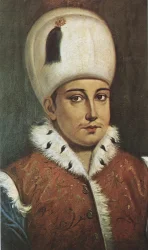
Heraclius Constantine
Heraclius Constantine, commonly called Constantine III by modern historians, was the eldest son of Emperor Heraclius and briefly the senior ruler of the Byzantine Empire in 641. His short reign came at a moment of uncertainty: his father had left the throne to be shared between sons from two marriages, and the balance of power between them quickly became a matter of court and military politics. Constantine died only months after Heraclius, leaving his own son to inherit a contested imperial legacy.
Heir to the Throne
Born on May 3, 612, Heraclius Constantine was the son of Heraclius and his first wife, Fabia Eudokia. His father became emperor in 610 after overthrowing Phocas and ruled through years of intense conflict, including the long war with the Sasanian Persian Empire. To secure the succession, Heraclius crowned his young son co-emperor in 613. Constantine thus held imperial rank for most of his life, even though he was still a child.
Constantine married Gregoria, a daughter of the general Niketas. The couple had children, including the future emperor Constans II. The early sources offer little detail about Constantine’s personality or his own policies. His place in history rests chiefly on his position in the dynasty and the crisis that followed his father’s death.
A Divided Succession
Heraclius died on February 11, 641. His will recognized both Constantine and Heraclonas, his younger son by his second wife, Martina, as emperors. Martina also held a powerful position as empress and sought to safeguard the interests of her own children. The arrangement attempted to avoid excluding either branch of the imperial family, but it left the court with competing centers of authority.
Constantine was the older and long-established co-emperor, while Heraclonas was still a child. Martina exercised influence on behalf of her son, and the political situation soon became tense. Constantine’s supporters included officials and soldiers who feared that he and his children might be pushed aside. The surviving accounts, written from later perspectives, describe factional conflict but do not allow every maneuver or accusation to be reconstructed with certainty.
Senior Emperor and Sudden Death
In the months after Heraclius’s death, Constantine became senior emperor, though the exact balance of power between the brothers and Martina remains difficult to define. He died in May 641, reportedly after a serious illness. The speed of his death led to rumors that Martina had arranged his poisoning. Those stories became part of the political struggle surrounding the succession, but they are not established fact.
After Constantine’s death, Heraclonas ruled with Martina. The army and Constantinopolitan political establishment continued to press for recognition of Constantine’s young son. Constans II was elevated as co-emperor later in 641, strengthening the claim of his father’s line. Within months, Heraclonas and Martina were overthrown, mutilated, and sent into exile—a brutal conclusion to the dispute over Heraclius’s succession.
Legacy
Heraclius Constantine left no long personal reign by which to judge his abilities as a ruler. His principal significance lies in the imperial succession crisis of 641 and the survival of his branch of the Heraclian dynasty through Constans II. The episode demonstrates how difficult it was to share authority in a monarchy where military support, court alliances, and dynastic legitimacy all mattered. Though overshadowed by his father and son, Constantine’s brief position at the center of Byzantine power shaped the transition between their reigns.