Hermann Hendrich
 Germany
Biography of Hermann Hendrich
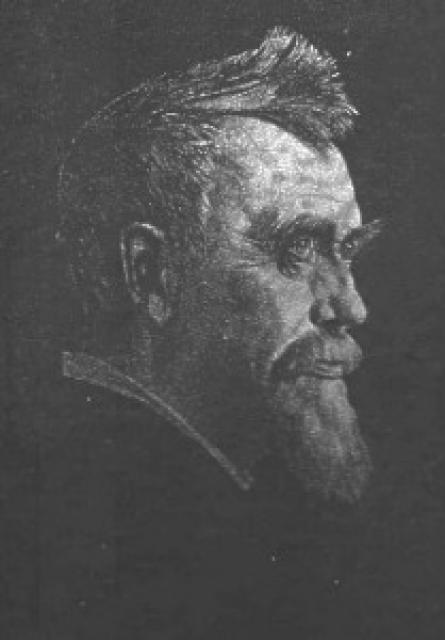
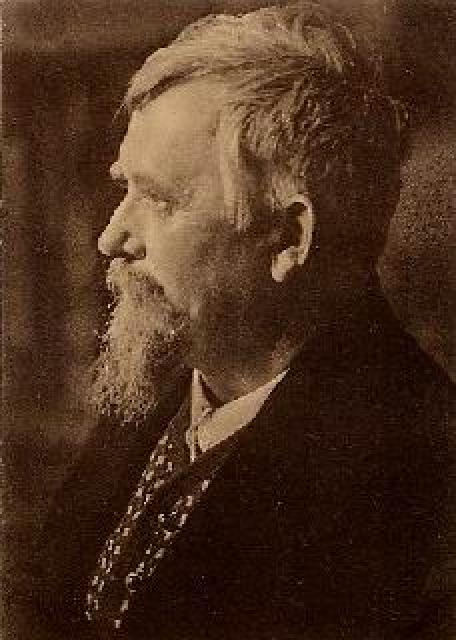
Hermann Hendrich was a German artist and one of the founders of the Werdandibund, a union that opposed modernist movements in the visual arts. He was born in 1870 into a family of bakers. From 1870 to 1872, he studied lithography and later worked in Hanover in a production facility for making table lamps, where he illustrated advertising catalogs.
During this time, Hendrich became a passionate admirer of Richard Wagner's musical compositions, particularly the opera "Tannhäuser". In 1875, he moved to Berlin and transitioned from graphic art to oil painting. In 1876, he embarked on a study trip to Norway. However, after his paintings were criticized by the commission of the Great Berlin Art Exhibition, he left for Amsterdam, where he worked as an artist.
In 1882, Hendrich got married and then moved to New York, where his brother lived. He organized his first exhibition and sale of his works there and also took a study trip across the United States. In 1885, he returned to Germany and attended lectures by Professor Wenglein on painting in Munich. He then moved to Berlin and embarked on another study trip to Norway. In 1886, he enrolled in the Berlin Academy of Art with a scholarship from the Prussian Ministry of Education, and his paintings were exhibited in Germany for the first time.
In 1889, one of Hendrich's paintings was purchased by the German Emperor, which led to widespread recognition of his talent. In 1905, he co-founded the Werdandibund and in 1910 was awarded the title of Professor of Art. In Berlin, a square in the city was named after him, known as the Hendrichplatz.
In 1901, Hendrich created paintings and artistic interiors for the Valpurgishalle in Thale, a building designed by architect Bernhard Sehring. These works were made in a romantic, old-German style and Hendrich considered them the pinnacle of his creativity. Inspired by his work in the Valpurgishalle, he built the Sagenhalle in Schreiberhau in 1903.
In 1913, to commemorate the centenary of Richard Wagner's birth, the Nibelungenhalle was opened on Drachenfels Mountain, which was decorated by Hendrich. He created 12 paintings based on ancient Germanic legends about the Nibelungs for this hall. In 1921, he illustrated the works of Goethe, and in 1926, an exhibition of his paintings on the legends of Parzival was opened in Burg an der Wupper (now in Solingen) in the German Hall of Sagas.